

The most common issue caused by long sitting hours, wrong posture, or daily stress on the spine is back pain. When done regularly and mindfully, gentle movement can become a noticeable difference. The present guide is devoted to the application of movements that are absolutely safe, slow, and effective in relaxing tight muscles and improving the range of motion. No equipment is needed for these exercises and they can be done at a pace that is comfortable for you. When they are practiced regularly, they result in lower back pain relief and promote the healthy movement of the body through simple home exercises.
Why Gentle Stretching Helps the Back
The process of stretching consists of increasing blood circulation, lessening the stiffness of the muscles, and assisting in the natural alignment of the spine. Slow stretches, unlike strenuous workouts, do not lead to the tightening of the muscles but rather they relax them. Eventually, this might lead to the reduction of the pain and the prevention of the future strain. A tranquil atmosphere, an even pace of breathing, and a controlled movement are the essentials for deriving maximum benefits from stretching.
Knee-to-Chest Stretch
How to Do It
Position yourself on your back with your knees bent and soles of the feet resting flat on the ground. Slowly draw one knee towards your chest and clasp it with both hands. The other foot should remain on the ground. Keep in this position for 20–30 seconds and then change sides.
Benefits
This particular exercise allows the tension in the lower spine and hips to alleviate. It is frequently part of back pain stretches because it is both a safe and comforting method. When performed in a slow manner, it helps lower back pain by reducing the pressure on the lumbar area. This one is also a very basic home workout for starters.

Cat–Cow Stretch
How to Do It
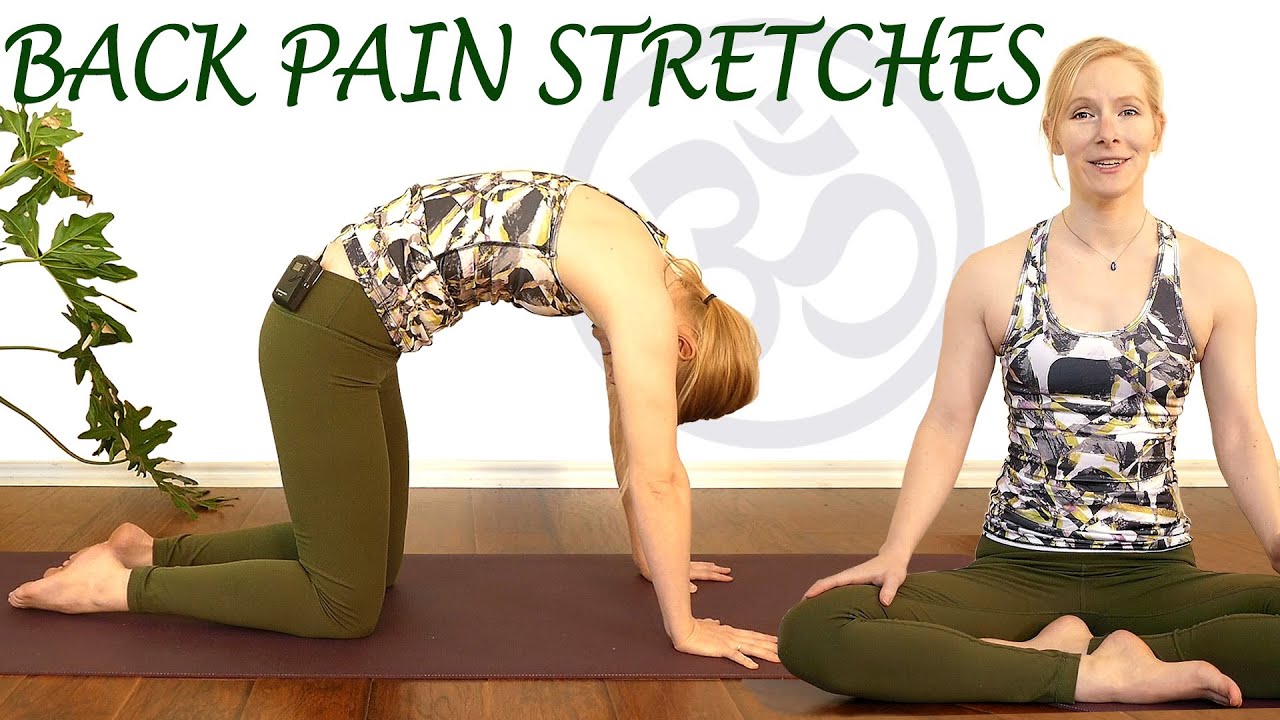
Get into a position where you are on all fours with your back in a neutral position. As you inhale, let your stomach down and raise your chin, then as you exhale, arch your back and pull your chin in. Do all this in a slow manner and in accordance with your breath.
Benefits
The Cat-Cow pose enhances spinal flexibility and fosters gentle movement among vertebrae. It is enormously used in back pain stretches because it allows the whole spine to get mobilized without any pressure. Daily practice may very well result in the decrease of lower back pain while maintaining your routine of conscious home exercises which also includes the use of perhaps regular practice.
Seated Forward Bend
How to Do It
Sit down on the floor and stretch your legs in front of you. Inhale, then lengthen your spine and slowly bend forward from the hips. Stretch your hands towards your shins or ankles without forcing the stretch.
Benefits
Targeting the lumbar region and hamstrings is what this stretch is all about, which are the two places that most usually lead to pain. Including it in the routine stretches for back pain will not only help but also reduce tightness caused by prolonged sitting. When done gently, this stretch provides relief from lower back pain and is also the most convenient option among indoor calming home exercises.
Child’s Pose
How to Do It
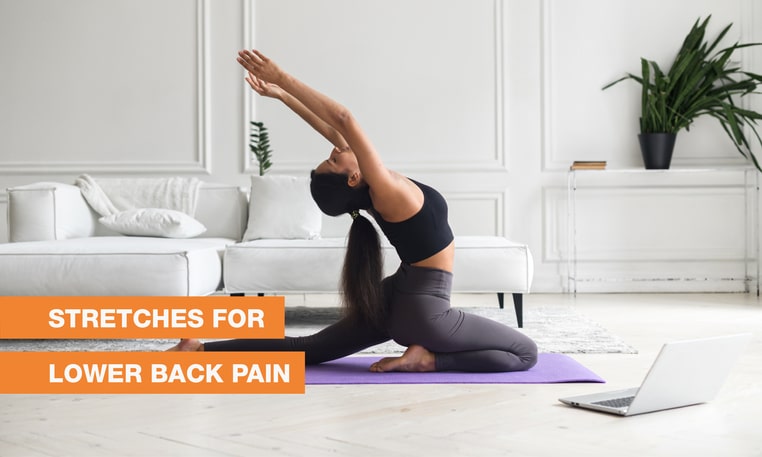
Kneel on the floor, then sit back on your heels and fold forward with arms either stretched out or lying down beside you. Let your forehead sink down and relax in that position.
Benefits
Child’s Pose is a pose that is relaxing, it decompresses the spine and is often included in stretches for back pain due to the reason that it promotes full-body relaxation. The position provides lower back pain relief by gradually elongating spinal muscles and it is among the most soothing home exercises for stress-related tension.
Standing Side Stretch
How to Do It
Stand straight with your feet hip-width apart. Lift one arm above your head and slowly incline to the opposite side. Move slowly and in a controlled manner, then change sides.
Benefits
The stretch focuses on the torso sides and lower back, which are muscles that often get tight due to everyday activities. It is a great accompaniment for the back pain stretches as it enhances overall spinal balance and mobility. Once you start to do this stretch regularly you will be able to enjoy better posture and be more comfortable during the day.
Tips for Safe Stretching at Home
Your body should always come first and that thus you should never force anything if there is pain. Stretching practices should be enjoyable and not a struggle. Deep breathing throughout the motion facilitates relaxing the muscles and increases the treatment’s efficiency. Regularity is the key factor not that of power, therefore try to do daily exercise instead of having long sessions only once in a while.
People at the end of their recovery or needing support may still find it useful to stretch and use Kinesio taping together as one of the supportive methods. Kinesio techniques are widely applied for providing mild support to joints and muscles while allowing their full range of motion. Gentle stretching combined with Kinesio taping may give an edge in one’s awareness of his/her body and posture.
Discover Modern Comfort: A Guide to Apartment Rent in Beirut
Beirut, the lively capital of Lebanon, is a city that blends deep-rooted history with a mo…



Discover Modern Comfort: A Guide to Apartment Rent in Beirut
Beirut, the lively capital of Lebanon, is a city that blends deep-rooted history with …