

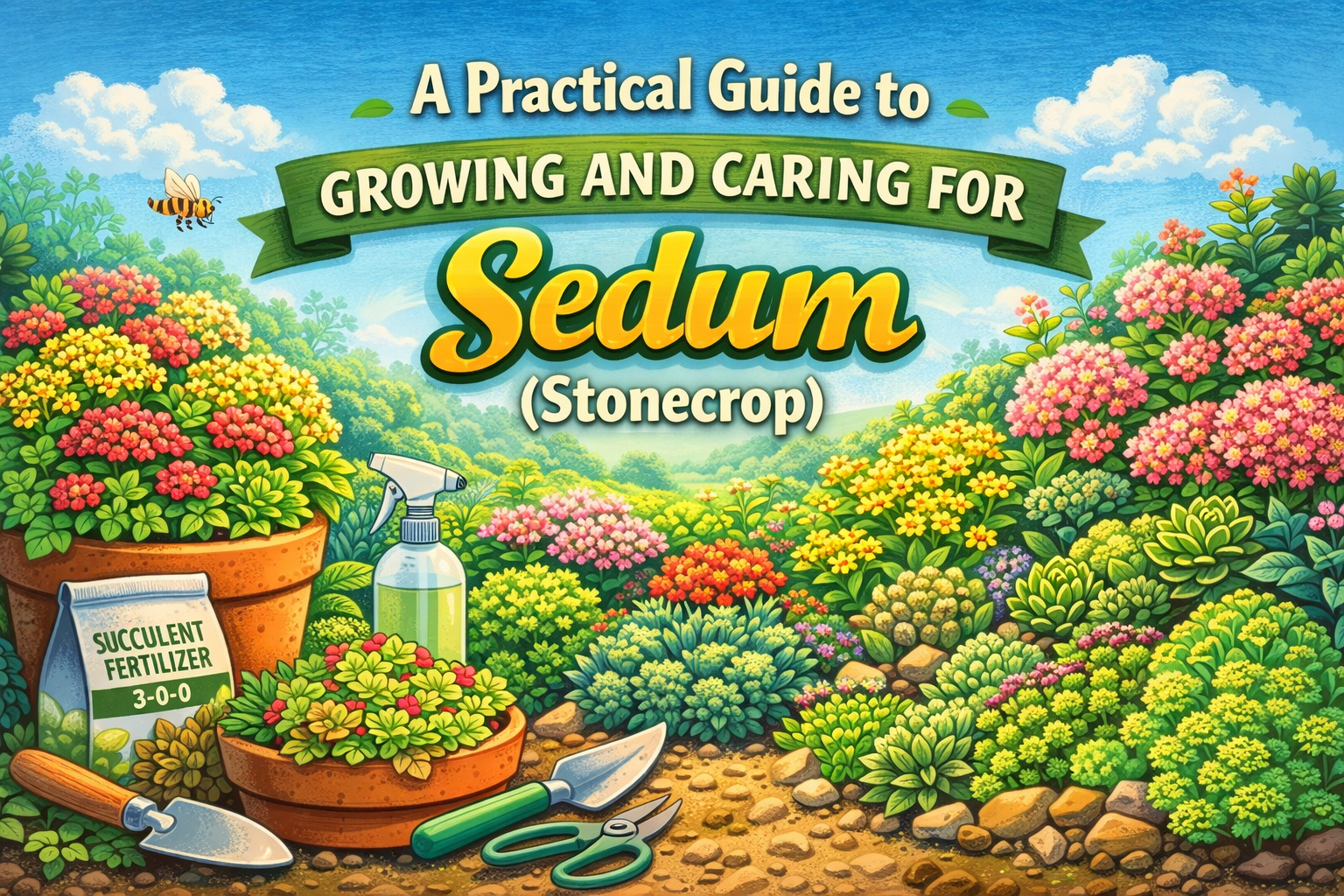
Sedum is an excellent flowering plant that is present on every continent. These plants are present in a wide variety of colors, forms, and heights. The plant is also known as stonecrop and is hardy and drought-tolerant, which is why many people like to grow it in their gardens. These succulents have thick and fleshy leaves that are present in different shades and possess tiny, star-shaped flowers that bloom for a long time.
Generally, the Sedum genus is divided into two different categories: low-growing and upright sedum. Low-growing sedums remain short and spread, whereas the upright sedum has vertical clumps that look good along borders and in flower beds. There are also several species of sedums that have been reassigned to a new genus. One of the best examples of this variety is the ‘Autumn Joy Sedum’.
How to Properly Care For Sedums?
If you have sedums in your garden, you will not only enjoy their beautiful foliage and flowers during the entire growing season, but they will also serve as long-lasting cut flowers and attract pollinators like butterflies and bees in your garden.
These plants are so easygoing that you just have to sit back and relax. There will be no need for deadheading (i.e., the removal of spent blooms), and even in winter, sometimes they still look good. Yet, the very hot climates and insufficient light could make sedum plants a little leggy. Pruning off the flowering stalks of the plants after they have produced the flowers helps keep their form, and alongside that, a bushier, more robust growth is promoted.
Planting
In the spring, after the frost threat has gone but before the summer heat arrives, is the time when the sedum plant is best planted. Just place them in a location with well-drained soil and good sunlight, and they will almost look after themselves. Sedums are great for large plantings, tucking in as edging and ground cover, and also for container growing. Sedums that are newly planted should be watered regularly until they get established.
Light
The majority of sedum plants do well in full sunlight, which is at least six hours of direct sunlight every day. A few types can grow in partial shade, but they will usually not be as strong or have as many flowers as they would in full sun. On the other hand, many sedum types will be grateful for some shade during the afternoon if they are in very hot and dry conditions.
Soil
To put it simply, sedum likes to have a loose loam, sand, or gravel soil with excellent drainage. If the soil retains too much water, as it often happens with heavy, wet clay soil, this will easily result in root rot and fungal diseases for sedum.
Water
You should water your Sedum plants once a week during the first year to ensure that the soil does not dry out. This also provides the young plants a good start to grow and thrive. Once these plants are established, you do not need to focus on supplemental watering unless there is a very long stretch without rainfall.
We also recommend using the website Abodelook to learn more about the care of a Sedum plant.
Discover Modern Comfort: A Guide to Apartment Rent in Beirut
Beirut, the lively capital of Lebanon, is a city that blends deep-rooted history with a mo…



Discover Modern Comfort: A Guide to Apartment Rent in Beirut
Beirut, the lively capital of Lebanon, is a city that blends deep-rooted history with …