

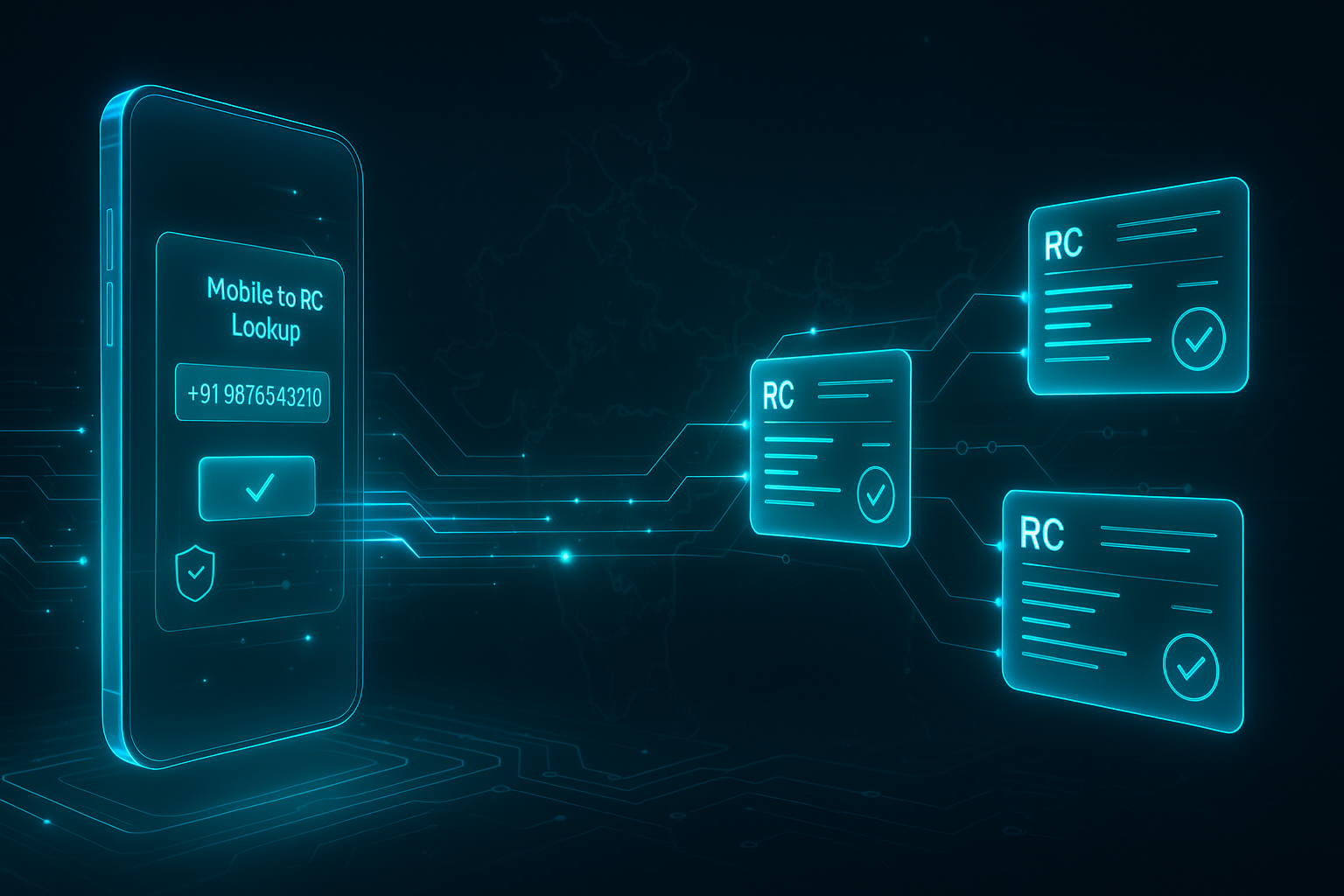
By retrieving vehicle Registration Certificate (RC) details using a mobile number, platforms can verify vehicles faster, reduce onboarding friction, and ensure accurate records across their systems.
Why Vehicle Verification Is Critical in Fleet & Logistics Operations
Fleet and logistics companies onboard vehicles from diverse sources. These include individual driver-owners, small transporters, aggregators, and third-party partners. Each vehicle must be legally registered, compliant, and suitable for commercial operations.
Without proper verification, platforms risk onboarding unauthorized vehicles, facing compliance violations, or encountering disputes during audits. Mobile to RC verification helps confirm vehicle identity early and reduces long-term operational risk.
What Mobile to RC Verification Means for Fleet Platforms
Mobile to RC verification allows platforms to fetch vehicle registration details using a driverᴙs or ownerᴙs mobile number. Instead of relying only on uploaded RC documents, the system retrieves linked vehicle data from verified records.
This approach connects a trusted identifierᴔthe mobile numberᴔwith official vehicle data, creating a strong verification layer for fleet onboarding and management.
How Mobile to RC API Works
Mobile to RC API processes a mobile number and returns the associated vehicle RC details where available. The response typically includes registration number, vehicle class, fuel type, registration status, and basic ownership indicators.
Because the data is delivered in a structured format, it can be integrated directly into fleet management systems, onboarding dashboards, and compliance tools.
Faster Vehicle Onboarding at Scale
Fleet growth depends on quick and reliable onboarding. Manual RC verification slows down activation and creates backlogs during high demand.
Mobile to RC API enables instant vehicle identification without waiting for document uploads or manual review. Faster onboarding allows platforms to expand capacity quickly while maintaining verification standards.
Improving Data Accuracy Across Fleet Systems
Fleet operations rely on accurate vehicle data for dispatching, billing, compliance reporting, and analytics. Inconsistent or outdated RC information can cause operational errors and compliance gaps.
Mobile to RC verification ensures standardized vehicle data across all systems. Clean data improves coordination between operations, finance, and compliance teams.
Supporting Compliance and Regulatory Requirements
Logistics and fleet platforms must comply with transport regulations, contractual obligations, and internal safety standards. Vehicles with invalid registration or incorrect details can expose platforms to penalties or service disruption.
Mobile to RC API helps ensure that only legally registered and verified vehicles are part of active operations. This simplifies audits and improves regulatory compliance.
Enabling Automated Compliance Alerts
Compliance is an ongoing process, not a one-time check. Vehicle registration expiry, invalid records, or status changes can occur over time.
Mobile to RC API supports compliance monitoring by providing registration status data. Platforms can trigger automated alerts for vehicles with inactive or expiring registrations, enabling proactive action before issues arise.
Strengthening Fraud Prevention and Risk Control
Fraud in fleet operations often involves unauthorized vehicles, fake RC documents, or misrepresented ownership. Manual checks may fail to detect these risks early.
Mobile to RC verification reduces fraud exposure by validating RC details directly from verified records. Suspicious vehicles can be flagged before they enter active operations.
Better Driver and Vehicle Mapping
Accurate mapping between drivers and vehicles is essential for accountability and incident management. Incorrect vehicle assignment can complicate dispute resolution and insurance claims.
Mobile to RC API helps ensure that vehicles assigned to drivers are properly verified and traceable, improving operational transparency.
Reducing Manual Effort and Operational Costs
Manual RC checks require staff time, document handling, and repeated follow-ups. These activities increase operational costs and slow scaling.
Mobile to RC API automates vehicle verification and reduces dependency on manual processes. Platforms can scale operations without expanding verification teams.
Use Cases Across Fleet & Logistics Platforms
Last-mile delivery platforms use Mobile to RC API to verify two-wheelers and small commercial vehicles quickly. Long-haul logistics companies use it to validate trucks and transport vehicles before deployment.
Ride-hailing and mobility platforms also rely on Mobile to RC verification to ensure vehicle compliance and safety across their fleets.
Supporting Digital-First Fleet Operations
Modern fleet platforms aim for fully digital workflows. Mobile to RC API aligns with this goal by enabling real-time verification without physical documents.
Digital-first verification improves speed, consistency, and user experience while maintaining strong controls.
Future Role of Mobile to RC APIs in Logistics
As fleet and logistics operations continue to digitize, automated verification will become a standard requirement. Mobile to RC APIs support scalable, secure, and intelligent fleet management.
Platforms that adopt this approach early gain better compliance, lower risk, and smoother operations at scale.
Conclusion
Mobile to RC API play a vital role in modern fleet and logistics platforms. They enable faster vehicle onboarding, improve data accuracy, support compliance alerts, reduce fraud risk, and lower operational costs.
For fleet and logistics platforms focused on scale, safety, and regulatory adherence, Mobile to RC API is not just a verification tool. It is a foundational component of smart and reliable fleet management.

Discover Modern Comfort: A Guide to Apartment Rent in Beirut
Beirut, the lively capital of Lebanon, is a city that blends deep-rooted history with a mo…



Discover Modern Comfort: A Guide to Apartment Rent in Beirut
Beirut, the lively capital of Lebanon, is a city that blends deep-rooted history with …