

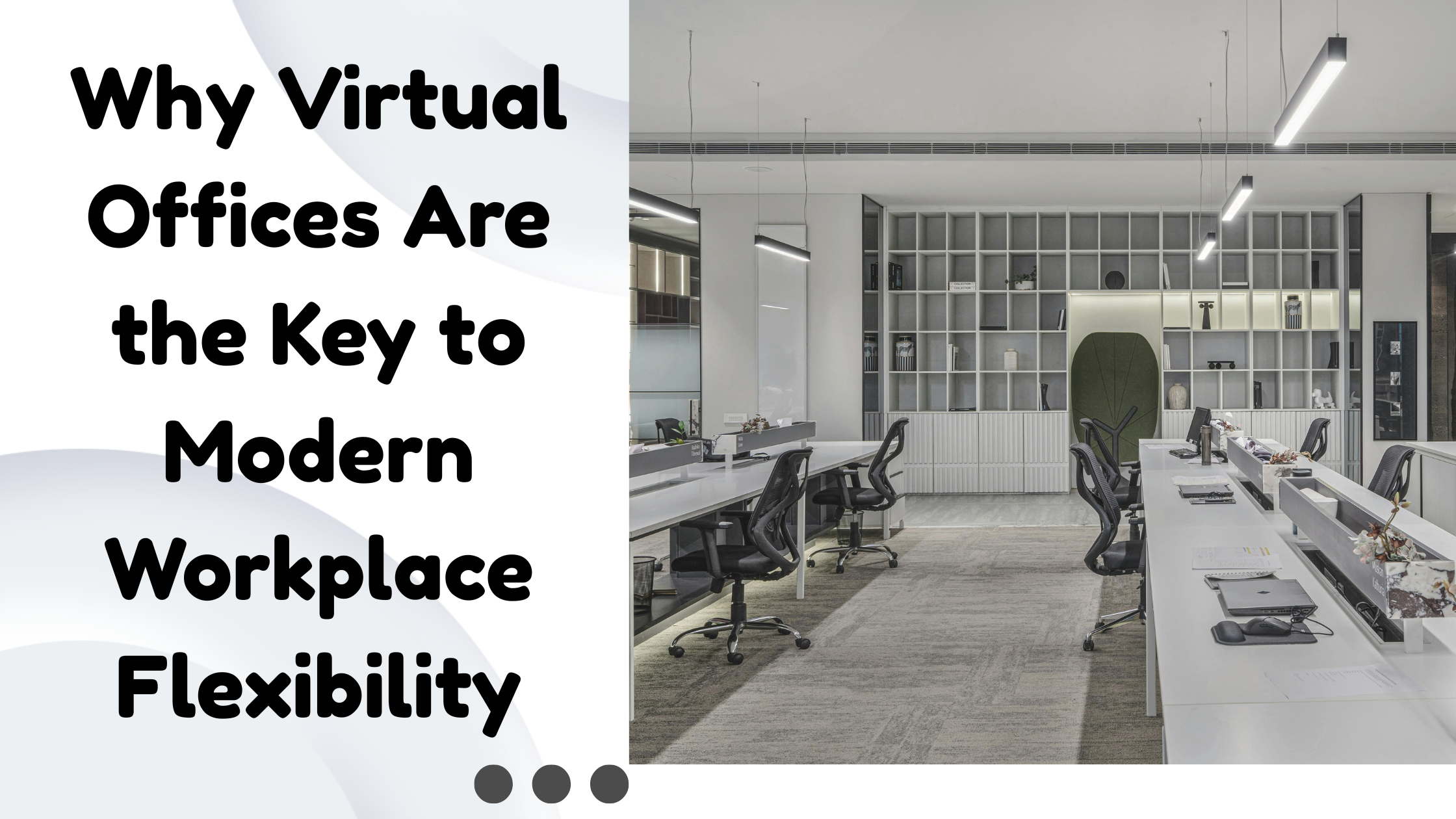
The idea of a workplace has quietly undergone one of the biggest transformations in modern business history. Not because offices disappeared overnight, but because work itself stopped being confined to four walls. Technology changed how teams collaborate. Talent expectations changed how companies hire. Markets changed how fast businesses need to move.
Virtual offices did not arrive as a convenience. They arrived as a solution.
For modern organizations, especially those building digital products, software platforms, and mobile applications, flexibility is no longer a cultural perk. It is operational infrastructure. Virtual offices sit at the intersection of credibility and adaptability, offering a professional presence without physical limitations.
This article breaks down why virtual offices matter today, how they support genuine workplace flexibility, and what businesses should consider before embracing them.
Let’s talk about how work really works now.
The Rise of Virtual Offices in Today’s Workforce
Virtual offices grew out of necessity, not novelty. As cloud systems matured and collaboration tools became reliable, physical proximity stopped being essential for productivity. Teams could ship products, manage clients, and scale operations without sharing a physical space.
At the same time, the workforce changed its expectations. Professionals began valuing autonomy, flexibility, and outcomes over fixed schedules and commutes. Businesses that adapted gained access to broader talent pools. Those that resisted faced hiring challenges and higher attrition.
Virtual offices filled a critical gap. They provided legitimacy without overhead. A business address without a lease. Administrative services without permanent staff. Meeting spaces without daily occupancy.
This shift was not about eliminating structure. It was about designing better structure for a distributed world.
Key Benefits of Virtual Offices for Businesses
Cost Savings
Traditional offices come with high fixed costs. Rent, utilities, maintenance, long contracts, and unused space all weigh heavily on growing businesses. These costs often restrict experimentation and slow expansion.
Virtual offices reduce these expenses significantly. Companies pay only for what they need, when they need it. Capital that would have gone into overhead can instead fund product development, hiring, and customer acquisition.
This is not about cutting corners. It is about allocating resources intelligently.
Access to a Global Talent Pool
Virtual offices remove geographic hiring limits. Businesses can recruit based on skill, experience, and cultural fit rather than proximity.
This opens doors to diverse perspectives and specialized expertise across regions. It also allows companies to operate across time zones, improving responsiveness and delivery timelines.
The strongest teams are rarely confined to one city.
Improved Employee Work-Life Balance
Virtual offices support work models that give people control over their schedules and environments. Commutes shrink or disappear. Focus improves. Stress often decreases.
When employees feel trusted, accountability increases. Output becomes more consistent. Retention improves because work integrates into life rather than competing with it.
This balance benefits both people and performance.
Scalability and Growth Opportunities
Scaling a physical office is slow and expensive. Scaling a virtual presence is not.
Virtual offices allow businesses to enter new markets quickly. A presence can be established without relocation or construction. Services can be expanded or reduced without long-term commitments.
This flexibility is especially valuable in uncertain or rapidly changing markets.
Reduced Environmental Impact
Fewer commutes reduce emissions. Less physical space lowers energy consumption. Virtual offices naturally support more sustainable operations.
Sustainability is no longer separate from business performance. It influences partnerships, brand perception, and long-term resilience.
Quick pause. Still with us? Good. Now let’s look at how flexibility actually plays out day to day.
How Virtual Offices Support Workplace Flexibility
Flexible Work Hours
Virtual offices enable asynchronous work. Teams do not need to operate on identical schedules to remain effective.
Employees work during their most productive hours. Deliverables matter more than presence. This flexibility reduces burnout and improves quality of output.
For businesses, progress continues without forcing uniform availability.
Seamless Collaboration Across Time Zones
Distributed teams succeed when collaboration is intentional.
Virtual office environments integrate shared documentation, task management tools, and communication platforms. Meetings become purposeful. Decisions are documented. Knowledge remains accessible.
Time zone differences become an advantage rather than an obstacle.
Real-Time Communication Tools
Video calls, instant messaging, and collaborative platforms recreate the immediacy of in-person interaction. Questions are resolved quickly. Decisions move faster.
The value lies not in the tools themselves, but in how clearly teams are trained to use them.
Structure creates clarity. Clarity enables speed.
Adaptability to Business Needs
Business requirements change constantly. Virtual offices adjust just as quickly.
Need a meeting room for a client discussion? Book it. Need a local presence in a new city? Activate it. Need to reduce services temporarily? Adjust without penalties.
Flexibility works best when it is designed into the system.
Virtual Office Space: What to Look For
Professional Business Address
A credible address builds trust instantly. Clients, partners, and investors often assess legitimacy before engagement.
Virtual offices should offer addresses in established business districts. This signals stability and professionalism from the outset.
First impressions still matter.
Virtual Receptionist and Call Handling Services
Unanswered calls mean lost opportunities.
Virtual receptionist services ensure calls are handled professionally and routed correctly. This maintains consistency while allowing teams to focus without constant interruptions.
Small details often make the biggest difference.
Access to Meeting Rooms and Coworking Spaces
Remote teams still need physical spaces at times. Client meetings. Strategy sessions. Team gatherings.
A strong virtual office offering includes access to meeting rooms and coworking spaces on demand. This hybrid model balances flexibility with human connection.
Comprehensive Administrative Support
Mail handling, package forwarding, and administrative assistance reduce operational friction.
When these tasks are managed efficiently, teams focus on higher-impact work. Productivity improves quietly and consistently.
Now let’s address the realities that require careful thought.
Challenges and Considerations When Using Virtual Offices
Maintaining Company Culture
Culture does not disappear in virtual environments. It requires intention.
Without informal office interactions, businesses must create new rituals. Regular check-ins. Shared goals. Clear values reinforced consistently.
Culture becomes designed rather than accidental.
Security and Data Protection
Distributed work increases security risks.
Virtual office setups require strong cybersecurity practices. Secure access controls. Employee training. Continuous monitoring.
Security must be treated as foundational infrastructure.
Communication Barriers
Digital communication can amplify misunderstandings.
Clear documentation, structured channels, and defined expectations reduce friction. Teams must be taught how to communicate effectively without relying on proximity.
Silence should never be assumed as alignment.
Work-Life Balance Challenges
Flexibility can blur boundaries.
When work can happen anywhere, it can feel like it happens everywhere. Businesses should encourage defined working hours and respect personal time.
Flexibility thrives when paired with discipline and trust.
Conclusion
Virtual offices are not a temporary response to changing work trends. They reflect a deeper shift in how businesses operate. They reduce fixed costs, unlock global talent, support scalability, and align with modern expectations of work.
For companies building digital products and services, this evolution feels natural. Flexibility is already embedded in how systems are designed. When implemented thoughtfully, virtual offices provide structure without rigidity and freedom without chaos.
Organizations that succeed going forward will be those that design workplaces around reality rather than tradition. When chosen and managed well, virtual office solutions become a strategic advantage that supports long-term growth and resilience.
FAQs
What exactly is a virtual office?
A virtual office provides businesses with a professional address, administrative services, and access to meeting spaces without requiring a permanent physical office. It allows companies to operate remotely while maintaining credibility.
Are virtual offices suitable for large enterprises?
Yes. Many large organizations use virtual offices to support distributed teams, enter new markets, or reduce overhead while maintaining a professional presence.
Do virtual offices work for client-facing businesses?
They do. Features like call handling, meeting rooms, and reputable addresses help maintain a polished and professional client experience.
How do virtual offices affect employee productivity?
When implemented correctly, virtual offices often improve productivity by reducing distractions, eliminating commutes, and allowing employees to work during their most effective hours.
What industries benefit most from virtual offices?
Technology, consulting, professional services, and digital-first businesses benefit significantly. Any industry that values flexibility and scalability can gain from a virtual office model.
Discover Modern Comfort: A Guide to Apartment Rent in Beirut
Beirut, the lively capital of Lebanon, is a city that blends deep-rooted history with a mo…



Discover Modern Comfort: A Guide to Apartment Rent in Beirut
Beirut, the lively capital of Lebanon, is a city that blends deep-rooted history with …