

Hearing is one of the most vital senses, yet many people often overlook regular hearing assessments. With advancements in audiology, precise tests like the ABR test and ASSR test have become essential tools to evaluate hearing, especially in newborns, infants, and individuals who cannot provide reliable feedback during conventional hearing tests. Understanding these tests helps in early diagnosis and effective intervention for hearing impairments.
What is an ABR Test?
The ABR test, also known as the auditory brainstem response test, is a non-invasive procedure that measures how the hearing nerve and brainstem respond to sounds. This test is particularly useful for newborns, young children, or individuals who are unable to communicate their hearing experience effectively.
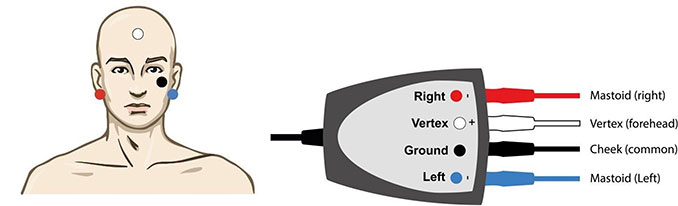
During an ABR test, electrodes are gently placed on the scalp and earlobes. These electrodes record the brain’s electrical activity in response to sound stimuli delivered through headphones. The responses help audiologists determine the type and severity of hearing loss, including whether it originates from the inner ear, auditory nerve, or brainstem pathways.
Key Uses of ABR Testing
The ABR test serves multiple purposes:
-
Newborn Hearing Screening: It is a standard tool in hospitals to detect early hearing issues in infants.
-
Diagnosis of Auditory Neuropathy: Helps identify cases where the inner ear works fine, but the auditory nerve has issues.
-
Hearing Threshold Estimation: Provides accurate hearing thresholds in patients who cannot respond behaviorally.
-
Neurological Assessment: Detects possible neurological disorders affecting hearing pathways.
The non-invasive nature and high accuracy of the auditory brainstem response test make it a cornerstone of modern audiology.
Understanding ASSR Testing
The ASSR test, or auditory steady-state response test, is another advanced method for assessing hearing. Unlike the ABR, the ASSR test uses continuous tones rather than clicks, which allows audiologists to estimate hearing thresholds more precisely across different frequencies.
During an ASSR test, electrodes are attached to the scalp, similar to the ABR test. The patient listens to modulated tones, and the brain’s electrical responses are recorded. These responses help in mapping the hearing profile in more detail, which is especially useful in fitting hearing aids or planning cochlear implant procedures.
Key Advantages of ASSR Testing
The auditory steady-state response test offers several benefits:
-
Frequency-Specific Assessment: It provides hearing thresholds at multiple frequencies, giving a detailed hearing profile.
-
Suitable for All Ages: Useful for infants, children, and adults who cannot reliably indicate hearing perception.
-
Objective Results: The test does not rely on patient responses, making it ideal for patients with developmental or cognitive difficulties.
-
Hearing Aid & Cochlear Implant Planning: Helps audiologists determine precise amplification needs for devices.
ABR Test vs. ASSR Test
While both tests evaluate hearing objectively, there are some key differences:
| Feature | ABR Test | ASSR Test |
|---|---|---|
| Stimulus Type | Clicks or tone bursts | Continuous modulated tones |
| Frequency-Specific | Limited | Detailed frequency-specific thresholds |
| Duration | Shorter | Slightly longer |
| Best For | Newborn screening, auditory neuropathy | Hearing threshold estimation, hearing aid fitting |
| Outcome | General hearing information | Detailed hearing profile |
Both the auditory brainstem response test and auditory steady-state response test complement each other in comprehensive audiological assessment. Often, audiologists recommend both tests for precise evaluation.
What to Expect During ABR and ASSR Tests
Both tests are painless and non-invasive. Patients usually sit or lie down in a quiet room. Small electrodes are placed on the scalp, and headphones deliver sounds. No active response is required, although infants may be asleep during testing to ensure accurate readings.
The tests generally take between 30 to 60 minutes, depending on the patient’s age and cooperation. After the tests, audiologists analyze the recordings and provide a detailed report on the patient’s hearing thresholds and any potential concerns.
Who Should Consider ABR and ASSR Tests?
-
Newborns and Infants: Early detection of hearing issues is crucial for language development.
-
Children with Speech or Language Delays: Helps identify underlying hearing problems.
-
Adults Unable to Communicate Hearing Difficulties: Includes patients with developmental disorders or cognitive challenges.
-
Patients Requiring Hearing Devices: Assists in hearing aid or cochlear implant fitting.
-
Individuals Suspected of Auditory Neuropathy: Objective testing confirms diagnosis.
Early detection through ABR test and ASSR test can dramatically improve outcomes for patients with hearing loss, allowing timely intervention and support.
Benefits of Early Hearing Assessment
Regular hearing evaluations, especially using objective tests like ABR and ASSR, provide significant benefits:
-
Improved Speech and Language Development in children.
-
Better Quality of Life through timely hearing aid fitting or cochlear implants.
-
Accurate Diagnosis of hearing or neurological disorders.
-
Peace of Mind for parents and caregivers knowing that hearing is being monitored professionally.
Choosing a Reliable Hearing Assessment Service
When opting for ABR and ASSR tests, it is essential to select a hearing clinic that offers:
-
Experienced audiologists.
-
State-of-the-art equipment for both auditory brainstem response tests and auditory steady-state response tests.
-
Detailed consultation and follow-up for accurate diagnosis.
-
Comprehensive pediatric and adult audiology services.
A trusted hearing assessment center ensures precise testing, accurate diagnosis, and appropriate recommendations tailored to each patient.
Conclusion
The ABR test and ASSR test are indispensable tools in modern audiology, offering objective, accurate, and reliable hearing assessments for patients of all ages. Whether for newborn hearing screening, detecting auditory neuropathy, or planning hearing device interventions, these tests provide the clarity needed for effective care.
Choosing professional hearing assessment services ensures that patients receive precise evaluation and timely intervention, leading to better hearing outcomes and improved overall quality of life. If you or your loved ones require a hearing assessment, consulting a qualified audiologist for ABR and ASSR test is the first step towards optimal auditory health.


Discover Modern Comfort: A Guide to Apartment Rent in Beirut
Beirut, the lively capital of Lebanon, is a city that blends deep-rooted history with a mo…



Discover Modern Comfort: A Guide to Apartment Rent in Beirut
Beirut, the lively capital of Lebanon, is a city that blends deep-rooted history with …