

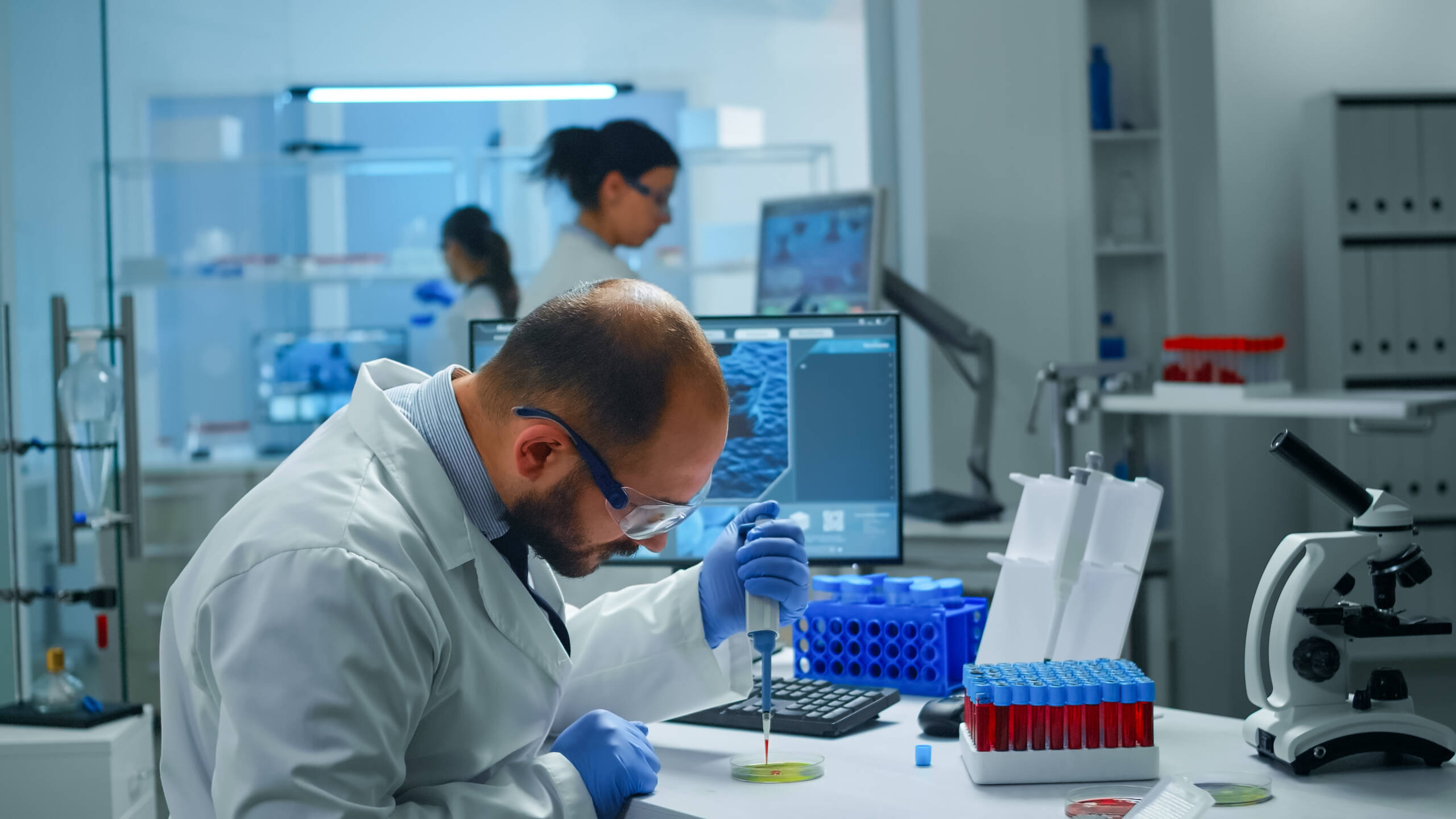
In today’s rapidly evolving pharmaceutical landscape, biologics, including monoclonal antibodies, vaccines, and recombinant proteins, represent one of the most dynamic and promising areas of therapeutic innovation. These large, intricate molecules differ fundamentally from traditional small-molecule drugs due to their structural complexity and extreme sensitivity to subtle modifications. Such characteristics demand rigorous characterization to guarantee patient safety, therapeutic efficacy, and successful navigation of regulatory pathways.
High-resolution analytical techniques are indispensable in this endeavor, delivering the precise, in-depth insights needed for everything from impurity detection to stability assessment and method validation. These tools support critical milestones, such as Investigational New Drug (IND) applications and ultimate market approval. Reflecting this growing emphasis on accuracy, compliance, and data quality, the Global Chemical Analytical and Consulting Services Market Size is Expected to Grow from USD 34.51 Billion in 2023 to USD 59.49 Billion by 2033, at a CAGR of 5.60% during the forecast period 2023-2033. As the need for sophisticated analytical support intensifies, mastering these advanced services remains vital for propelling forward-thinking drug development.
The Critical Importance of Characterization in Biologics Development
A biologic’s therapeutic performance is intrinsically linked to its molecular structure. Subtle variations, such as alterations in glycosylation or the emergence of degradation products, can significantly impact potency or trigger unwanted immune reactions. Insights from early-stage efforts often draw on foundational work in discovery biology, which plays a pivotal role in pinpointing functional biomarkers, evaluating target engagement, and establishing the essential biological framework for accurate analytical assessments.
Regulatory bodies, including the FDA and EMA, require comprehensive characterization data encompassing:
- Structural identity and purity
- Potency and biological activity
- Safety profiles, with detailed impurity analysis
- Stability across diverse conditions
High-resolution techniques excel at revealing these critical details with exceptional precision and dependability.
Key High-Resolution Analytical Techniques Overview
Mass Spectrometry (MS)
- This method provides precise molecular weight determination and in-depth structural elucidation. In biologics, it excels at detecting post-translational modifications, impurities, and degradation routes. Its superior sensitivity positions high-resolution MS as a fundamental tool for impurity profiling.
Nuclear Magnetic Resonance (NMR)
- NMR offers valuable information on molecular architecture, dynamics, and binding interactions. Though not routine in quality control, it proves essential for verifying higher-order structures in proteins and antibodies.
Chromatography (HPLC, UPLC)
- Techniques like high-performance liquid chromatography effectively separate and measure impurities, aggregates, and degradation fragments. Ultra-performance versions (UPLC) deliver improved resolution and faster run times, ideal for efficient, high-volume development workflows.
Capillary Electrophoresis (CE)
- Widely applied for evaluating charge variants, size heterogeneity, and protein isoforms, CE’s exceptional resolution ensures reliable assessment of product uniformity.
Spectroscopy (CD, FTIR)
- Circular dichroism (CD) and Fourier-transform infrared spectroscopy (FTIR) assess secondary and tertiary structures, confirming proper protein folding in biologics.
These complementary methods collectively yield a comprehensive, multi-layered perspective on biologic products, promoting consistency and accuracy.
Mastering Impurity Profiling: Uncovering Hidden Risks
Impurities arising from host cells, production processes, or degradation can compromise patient safety. High-resolution techniques detect these at ultra-low concentrations, surpassing the capabilities of conventional approaches. Notable examples include:
- MS for identifying trace process-related impurities.
- HPLC for detecting aggregates capable of provoking immune responses.
- CE for profiling charge variants due to production variations.
As biologic pipelines advance toward clinical and commercial readiness, impurity control becomes increasingly interconnected with upstream synthesis and scale-up activities. Organizations that collaborate with API Manufacturing partners to deliver more refined products are better positioned to align analytical insights with process development, enabling tighter control over raw materials, intermediates, and final active substances. This integration supports more predictable quality outcomes while reducing downstream risk.
Ensuring Long-Term Stability: Safeguarding Shelf Life and Patient Safety
Biologics are highly susceptible to stressors like temperature fluctuations, pH shifts, or light exposure. Robust stability testing verifies that products maintain safety and effectiveness throughout their designated shelf life.
Advanced high-resolution approaches enable developers to:
- Identify nascent degradation signals early.
- Assess performance under accelerated and real-world conditions.
- Define optimal storage and distribution protocols.
Such data also directly influences product labeling and supply chain strategies.
Achieving Method Validation for IND Preparedness
Prior to IND submission, developers must prove that analytical methods are reliable, repeatable, and purpose-suited. Validation criteria cover accuracy, precision, specificity, and sensitivity.
High-resolution techniques shine in this context, producing dependable data that holds up across development phases. When paired with experienced CDMO services, these validated methods can be seamlessly transferred from development into manufacturing environments, supporting regulatory alignment, scale-up efficiency, and long-term program continuity.
Discovery Biologics: Bridging Early Insights to Advanced Characterization
Discovery Biologics encompasses the foundational phase of identifying and optimizing biologic candidates, leveraging biological systems to uncover novel targets, generate lead molecules, and establish mechanistic understanding. This stage is crucial for biologics characterization, as it provides early data on structure-function relationships, potential modifications, and biomarkers that guide subsequent high-resolution analytical strategies. By integrating discovery biologics services, such as target validation and initial potency assessments, developers create a stronger foundation for precise impurity profiling, stability evaluation, and regulatory-compliant characterization throughout the pipeline.
Leveraging Comprehensive Analytical Chemistry Services
Effective biologics characterization demands not only cutting-edge instrumentation but also deep expertise in data interpretation. Premier analytical chemistry services deliver:
- Cutting-edge technological platforms.
- Seasoned experts in biologics analysis.
- End-to-end support from early discovery to IND submission.
- Documentation tailored for regulatory success.
This synergy of advanced tools and specialized knowledge minimizes risks, accelerates timelines, and bolsters clinical confidence.
Closing Perspectives
The inherent complexity of biologics requires unwavering precision throughout development. High-resolution analytical techniques, from mass spectrometry and chromatography to spectroscopy, empower developers to thoroughly characterize products, pinpoint impurities, confirm stability, and validate methods for approval.
Embracing these methodologies from the outset protects patient well-being while enhancing prospects for regulatory achievement. In essence, high-resolution characterization stands as a foundational pillar in biologics advancement, delivering therapies that are not only innovative but also safe, potent, and dependable for those who rely on them.

Discover Modern Comfort: A Guide to Apartment Rent in Beirut
Beirut, the lively capital of Lebanon, is a city that blends deep-rooted history with a mo…



Discover Modern Comfort: A Guide to Apartment Rent in Beirut
Beirut, the lively capital of Lebanon, is a city that blends deep-rooted history with …