

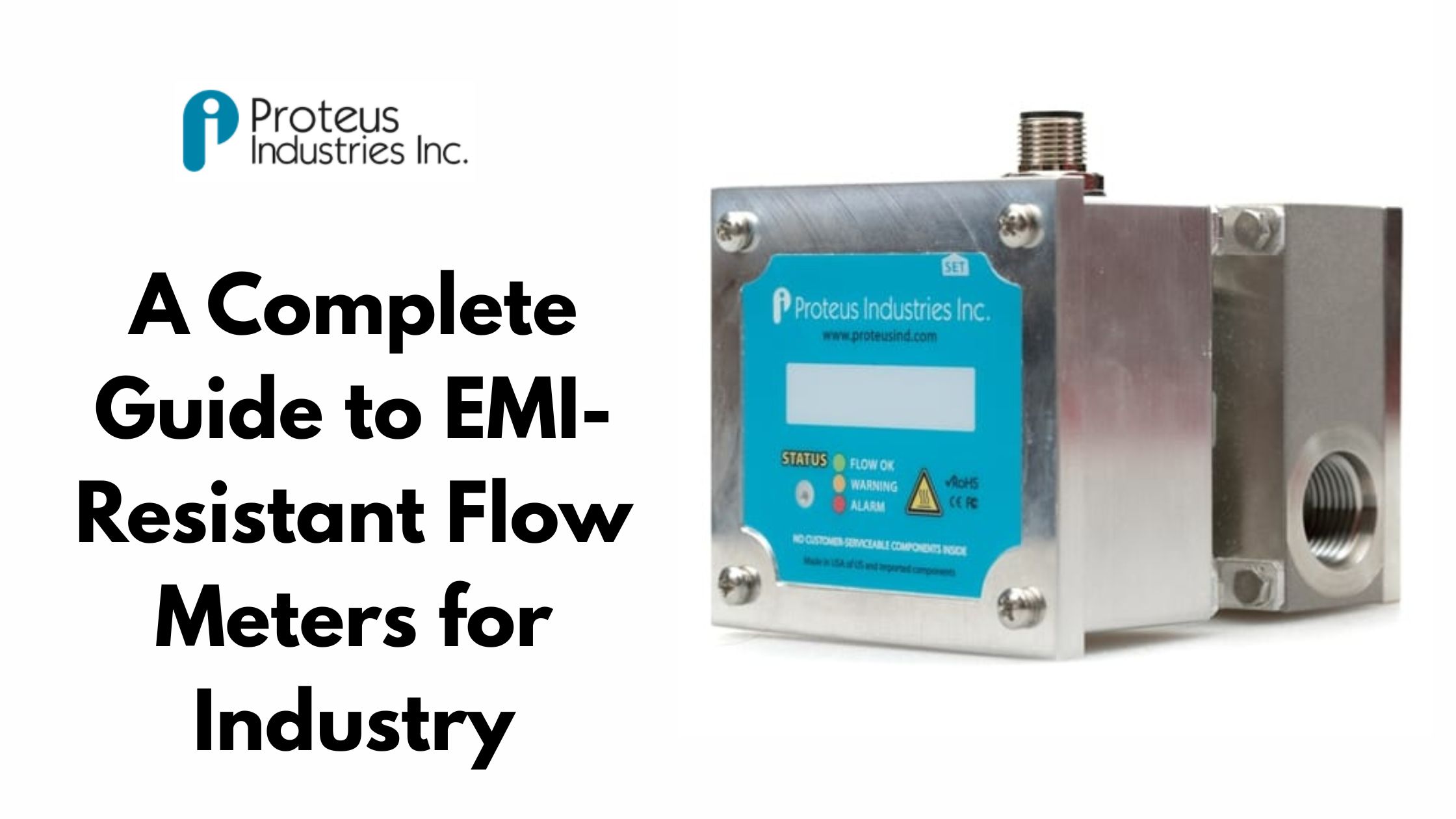
Accurate flow measurement is a critical requirement in modern industrial operations, where even minor inaccuracies can lead to production losses, safety risks, and increased operational costs. As industries continue to adopt automation, digital control systems, and advanced electronics, electromagnetic interference (EMI) has become a growing challenge. EMI can disrupt sensor signals, distort data, and compromise measurement reliability. This guide explores how EMI-resistant flow meters work, their benefits, applications, design features, and how to select the right solution for industrial use.
Understanding Electromagnetic Interference (EMI)
Electromagnetic interference refers to unwanted electrical noise that disrupts the normal operation of electronic devices. In industrial environments, EMI is commonly generated by high-power equipment, such as motors, variable-frequency drives (VFDs), transformers, welding machines, and high-voltage cables. EMI can be conducted through power and signal cables or radiated through the air as electromagnetic waves. Both forms can interfere with sensitive measurement electronics. Since flow meters rely on precise signal detection, EMI can significantly affect their performance if not properly managed, making EMI resistance a critical design requirement.
Impact of EMI on Industrial Flow Measurement
When EMI affects a flow meter, it can cause signal distortion, unstable readings, and inaccurate flow data. These disturbances may appear as random spikes, drifting values, or complete signal loss. In automated systems, erroneous flow measurements can disrupt process control, leading to inefficient energy use, product quality issues, or even safety hazards. Communication errors between the flow meter and PLC, DCS, or SCADA systems are also common in high-EMI environments. Without an EMI resistant flow meter, industries face increased downtime, troubleshooting costs, and reduced system reliability.
What Are EMI-Resistant Flow Meters?
An EMI resistant flow meter is a flow measurement device specifically engineered to operate accurately in environments with high electromagnetic noise. Unlike standard flow meters, these instruments incorporate advanced shielding, grounding, filtering, and signal-processing technologies to minimize EMI interference. Their purpose is to deliver stable, repeatable, and accurate flow data even in electrically harsh industrial conditions. EMI-resistant flow meters are essential in facilities where electrical interference is unavoidable, and measurement reliability is critical to operations.
Key Design Features of EMI-Resistant Flow Meters
EMI-resistant flow meters include several specialized design elements that protect measurement accuracy. Shielded cables prevent external electromagnetic fields from affecting signal transmission. Proper grounding and electrical isolation eliminate ground loops that amplify noise. Built-in EMI filters and noise suppression circuits remove unwanted electrical disturbances before they affect measurements. Rugged enclosures made from metal or specially coated materials provide additional protection. Together, these features ensure that an EMI resistant flow meter maintains performance even in demanding industrial environments.
How EMI-Resistant Flow Meters Improve Accuracy and Reliability?
An EMI resistant flow meter improves measurement accuracy by ensuring clean signal detection and minimizing electrical noise. This results in stable readings, improved repeatability, and reduced signal drift over time. Accurate measurements at low flow rates are especially important in precision processes. By delivering reliable data, EMI-resistant flow meters support better process control, consistent product quality, and improved operational efficiency, even in high-interference environments.
Role of Signal Processing and Digital Technology
Modern EMI-resistant flow meters rely heavily on advanced digital signal processing. Noise rejection algorithms filter out unwanted interference, while signal conditioning enhances measurement clarity. Error detection and data validation features ensure only accurate data is transmitted to control systems. Smart electronics allow an EMI resistant flow meter to adapt to changing conditions and integrate seamlessly with Industry 4.0 and data-driven manufacturing systems, further enhancing reliability and performance.
Installation Best Practices to Minimize EMI
Proper installation is essential to maximize EMI resistance. Signal cables should be routed away from power lines and high-voltage equipment. Correct grounding and earthing practices help eliminate ground loops. Shielded cables must be terminated properly to maintain effectiveness. Avoiding improper connections and following manufacturer guidelines significantly improves the performance of an EMI resistant flow meter and reduces long-term operational issues.
Industrial Applications of EMI-Resistant Flow Meters
EMI-resistant flow meters are widely used across industries where electrical interference is common. Power generation facilities rely on them for steam and cooling systems. Oil and gas plants use them in refining and processing operations. Chemical and petrochemical industries depend on accurate flow data for safety and quality. Water treatment plants, mining operations, steel mills, and cement factories also benefit from the reliability of an EMI resistant flow meter in harsh environments.
Standards and Certifications for EMI-Resistant Flow Meters
Compliance with EMC and EMI standards ensures that flow meters meet strict performance and safety requirements. International certifications verify that an EMI resistant flow meter can operate reliably without causing or being affected by electromagnetic interference. These standards provide confidence in measurement accuracy, system compatibility, and long-term reliability in industrial installations.
Selecting the Right EMI-Resistant Flow Meter for Your Application
Choosing the right flow meter requires evaluating the EMI level of the environment, process conditions, and accuracy requirements. Consider the type of fluid, operating temperature, pressure, and installation constraints. Long-term maintenance, durability, and manufacturer support are also important factors. A properly selected EMI resistant flow meter delivers consistent performance and protects the integrity of industrial processes.
Future Trends in EMI-Resistant Flow Measurement
Advancements in electronics, materials, and signal processing are driving the next generation of EMI-resistant flow meters. Smarter sensors, improved shielding technologies, and enhanced digital filtering are increasing reliability. As automation and Industry 4.0 adoption grows, the demand for robust EMI resistant flow meter solutions will continue to rise across industrial sectors.
Conclusion
An EMI resistant flow meter is a critical component for achieving accurate, reliable, and stable flow measurement in modern industrial environments. By protecting measurement signals from electromagnetic interference, these flow meters enhance process control, safety, efficiency, and long-term reliability. Investing in the right EMI-resistant solution ensures consistent performance, reduced downtime, and improved productivity, making it an essential choice for industries operating in electrically challenging conditions.
Discover Modern Comfort: A Guide to Apartment Rent in Beirut
Beirut, the lively capital of Lebanon, is a city that blends deep-rooted history with a mo…



Discover Modern Comfort: A Guide to Apartment Rent in Beirut
Beirut, the lively capital of Lebanon, is a city that blends deep-rooted history with …