

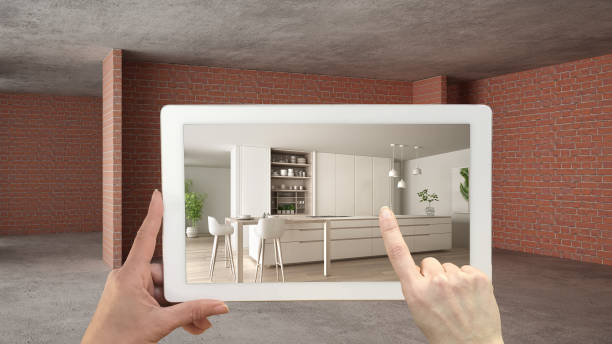
Augmented Reality, commonly known as AR, is rapidly changing the way homeowners and professionals approach home design and renovation. Unlike traditional design methods that rely on drawings, mood boards, or static 3D renders, AR allows digital elements to be overlaid onto the real world in real time. Using smartphones, tablets, or specialised headsets, clients can now see proposed design changes within their actual living spaces before any physical work begins. This shift is redefining expectations in the UK construction and renovation market, where homeowners increasingly seek certainty, transparency, and confidence before committing to major investments. AR bridges the gap between imagination and reality, making the design process more interactive, intuitive, and precise.
The Growing Demand for Visual Clarity in UK Renovations
One of the biggest challenges in home renovation has always been helping clients truly understand what the final result will look like. Floor plans and elevations require technical knowledge, while even high-quality renders can feel disconnected from the existing property. This is where AR has become especially valuable for Builders in Oxford, where many homes feature complex layouts, period details, and planning constraints. Homeowners want reassurance that extensions, loft conversions, or interior upgrades will harmonise with their existing space. AR provides that reassurance by allowing clients to walk through their own homes and view proposed changes at scale, within the actual environment, eliminating much of the uncertainty traditionally associated with renovation decisions.
How Augmented Reality Works in Home Design Projects
At its core, AR uses digital models that are anchored to real-world spaces through cameras and sensors. Designers and builders begin by creating accurate 3D models of proposed renovations, whether that involves a new kitchen layout, a rear extension, or a complete interior redesign. These models are then integrated into AR software, which maps them onto the client’s physical space using a device’s camera. When a homeowner points their device at a room, walls, furniture, and finishes appear as if they already exist. This live interaction allows users to move around, change perspectives, and explore design options in a way that static visuals simply cannot replicate.
Enhancing Client Confidence Before Construction Begins
One of the most significant benefits of AR in home design is the level of confidence it provides to homeowners. Renovations are expensive, disruptive, and often emotionally charged, particularly when they involve family homes. AR helps reduce anxiety by allowing clients to see exactly how changes will affect room proportions, natural light, and flow. This is especially important in UK homes, where space is often limited and every design decision must be carefully considered. When clients can visualise outcomes clearly, they are more comfortable approving plans, signing contracts, and moving forward with construction, knowing there are fewer surprises ahead.
Reducing Design Revisions and Costly Changes
Design misunderstandings are a common cause of delays and additional costs in renovation projects. Clients may approve drawings but later realise the scale or layout does not feel right once construction is underway. AR significantly reduces this risk by highlighting potential issues early in the process. Seeing a virtual extension from the garden, or a new staircase within an existing hallway, allows both clients and builders to identify problems before work begins. This proactive approach minimises late-stage changes, protects budgets, and keeps projects on schedule, which is particularly valuable in a market where material and labour costs continue to rise.
AR as a Tool for Collaborative Decision-Making
Augmented Reality also transforms the relationship between homeowners, designers, and builders into a more collaborative partnership. Instead of design decisions being explained verbally or through technical documents, AR creates a shared visual language. Clients can point out concerns in real time, request adjustments, or compare alternative layouts on the spot. This level of interaction encourages meaningful feedback and ensures that the final design reflects the client’s lifestyle, preferences, and long-term needs. In family homes, this can even involve multiple household members participating in the decision-making process, making AR a powerful engagement tool.
Supporting Bespoke and High-End Home Design
In bespoke home renovations, where custom features and premium finishes are central to the project, AR plays an even more critical role. High-end kitchens, tailored storage solutions, and custom-built furniture benefit greatly from accurate visualisation. AR allows clients to explore material combinations, colour palettes, and spatial relationships before any bespoke elements are manufactured. This is particularly valuable in properties where craftsmanship and detail are paramount, as it ensures that every design choice aligns with the overall vision and architectural character of the home.
Integrating AR with Traditional Design and Planning
While AR is a powerful innovation, it does not replace traditional design and planning processes. Instead, it enhances them. Architects and builders still rely on detailed drawings, structural calculations, and planning documentation to ensure compliance with UK building regulations. AR complements these technical stages by translating complex information into an accessible, visual experience for clients. In planning-sensitive areas, AR can also be used to demonstrate how proposed changes will appear from different viewpoints, supporting discussions with planners and neighbours by providing a clearer understanding of scale and impact.
AR and Its Role in Sustainable Home Design
Sustainability is an increasingly important consideration in UK home renovations, and AR can support more environmentally conscious decisions. By visualising natural light, insulation improvements, and spatial efficiency, homeowners can better understand how design choices affect energy performance and comfort. AR can demonstrate how larger windows influence daylight penetration, or how reconfigured layouts improve ventilation and usability. This visual insight encourages smarter design choices that align with long-term sustainability goals, reducing the likelihood of wasteful redesigns or unnecessary material use.
Improving Communication Across the Project Lifecycle
Clear communication is essential at every stage of a renovation project, from concept to completion. AR helps maintain that clarity throughout the project lifecycle. Initial concepts can be explored visually, refined during the design phase, and revisited during construction to confirm intent. For builders and tradespeople, AR can act as a reference tool to better understand design intent on site, reducing errors and rework. This continuity helps ensure that what is built closely matches what was envisioned, strengthening trust between clients and construction professionals.
Overcoming Challenges and Limitations of AR Technology
Despite its many benefits, AR is not without challenges. The accuracy of AR visualisations depends on precise measurements and high-quality 3D modelling. Poor data input can lead to misleading representations, which undermines trust in the technology. There is also a learning curve for both professionals and clients, particularly those less comfortable with digital tools. However, as AR software becomes more user-friendly and widely adopted, these barriers are steadily diminishing. Forward-thinking builders who invest in training and quality tools are best positioned to unlock the full potential of AR.
The Future of AR in the UK Home Renovation Market
Looking ahead, AR is expected to become a standard part of the home design and renovation process rather than a novelty. As hardware improves and software becomes more sophisticated, AR experiences will become even more immersive and accurate. Integration with artificial intelligence and real-time cost estimation could allow clients to see not only how a renovation will look, but also how design changes affect budgets and timelines instantly. In competitive markets such as Oxfordshire and the wider South East, AR will increasingly differentiate builders who prioritise transparency, innovation, and client experience.
Why AR Is Redefining Expectations in Home Design
Augmented Reality is reshaping how homeowners engage with renovation projects by making design tangible, accessible, and collaborative. It replaces guesswork with clarity and transforms abstract plans into lived experiences before construction begins. For UK homeowners investing in their properties, this level of insight is invaluable. As AR continues to evolve, it will play a central role in delivering smarter designs, smoother projects, and more satisfied clients. In a market where trust and precision matter more than ever, AR stands as a powerful tool that is redefining what modern home design can achieve.
Discover Modern Comfort: A Guide to Apartment Rent in Beirut
Beirut, the lively capital of Lebanon, is a city that blends deep-rooted history with a mo…



Discover Modern Comfort: A Guide to Apartment Rent in Beirut
Beirut, the lively capital of Lebanon, is a city that blends deep-rooted history with …