

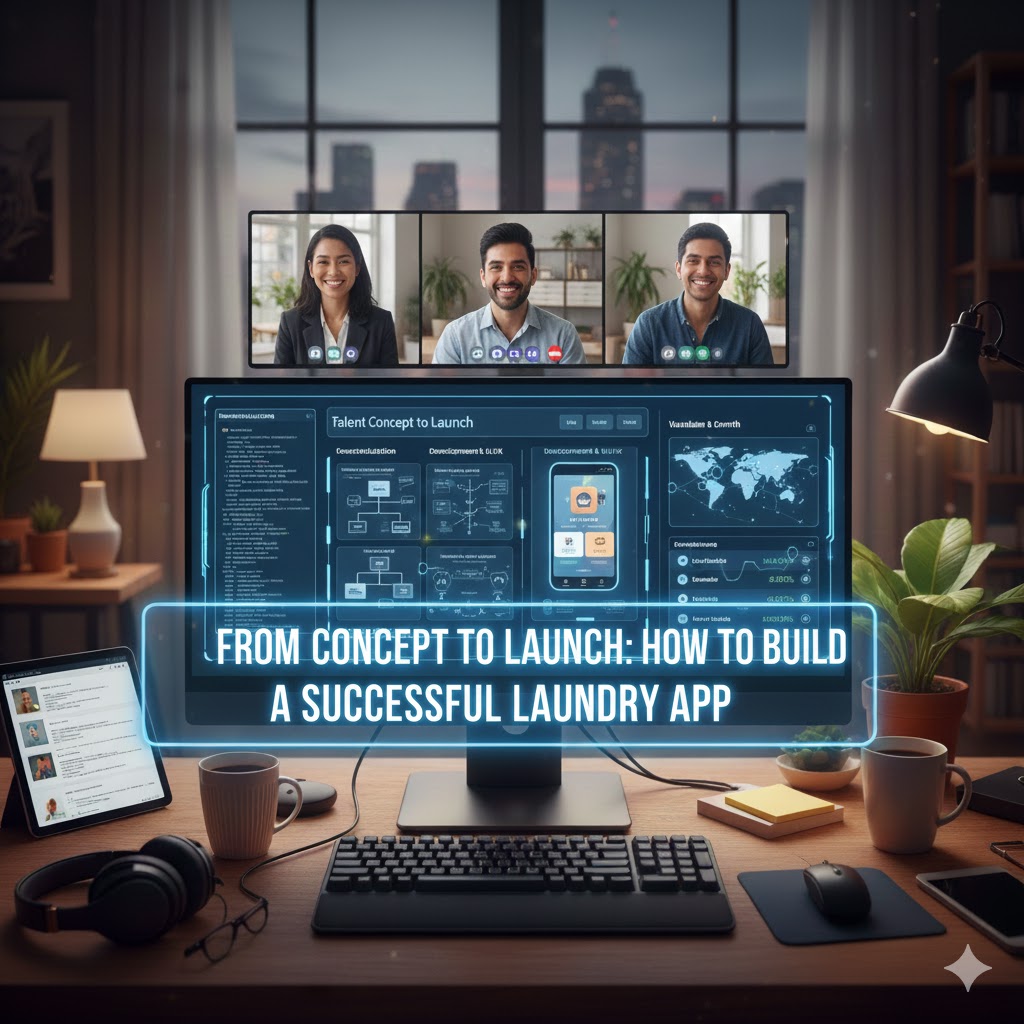
The laundry business is evolving rapidly. This change is mostly due to mobile technology. Customers want to be able to do their laundry quickly, easily, and clearly. Businesses can run their operations more efficiently and enhance the user experience by developing a laundry app.
There is more to making a laundry app than making the interface and adding payment options. It needs to be done carefully. Start by telling people what the app does. Then, make sure the app works well for a long time, and the launch goes well. This guide talks about the most important things to do and ways to make a laundry app that works. It tries to meet both the needs of customers and the goals of the business.
Understanding the Market and User Needs
Before starting laundry app development, research the market. Understand your target audience. Users expect apps that simplify tasks, provide real-time updates, and offer reliable service. Key considerations include:
- Demographics: Identify the primary users, such as busy professionals, students, or families.
- Pain points: Understand challenges in existing laundry services, such as delayed pickups, unclear pricing, or a lack of order tracking.
- Competitor analysis: Look at current apps. Find gaps in features, user experience, and services.
Surveys, interviews, and focus groups can confirm the app idea. They help ensure it meets real user needs.
Defining Core Features
A successful laundry app balances simplicity and functionality. Some core features are essential, even if they vary by market:
- User Registration and Profile Management: Users can sign up with their email, phone number, or social media accounts. They can also manage their preferences easily.
- Order Placement and Scheduling: Users can book laundry services. They can choose items and set up pickups and deliveries.
- Pricing and Payment Integration: Display clear prices. Offer various payment options, such as cards, wallets, and UPI.
- Real-Time Tracking: Users should be able to track the status of their laundry in real time.
- Notifications and Alerts: Keep users informed about pickup schedules, delivery times, and offers.
- Ratings and Reviews: Enable users to provide feedback and help maintain service quality.
Adding features like subscription plans, loyalty programs, or in-app chat can increase engagement. These changes keep users coming back.
Choosing the Right Platform
You can make laundry apps for Android, iOS, or use cross-platform options. Choosing a platform depends on a few factors: your target audience, budget, and maintenance plan.
- Native apps: Made for Android or iOS. They provide better performance and unique features for each platform.
- Cross-platform apps: Use frameworks like Flutter or React Native. They help you build one app for both platforms. This saves time and cuts costs.
The platform you pick impacts user experience, scalability, and development complexity. This makes it a key decision for laundry app development.
UI/UX Design Considerations
User experience (UX) is a cornerstone of any successful app. In professional laundry app development, the design should be intuitive, visually appealing, and efficient, allowing users to place orders, track services, and make payments seamlessly while enhancing satisfaction and engagement.
- Easy Navigation: Let users order, track services, and get support quickly.
- Consistent Branding: Use colors, fonts, and icons that reflect your brand identity.
- Responsive Layouts: Design for different screen sizes and resolutions. This helps you reach a wider audience.
- Interactive Elements: Buttons, forms, and sliders should be user-friendly and clearly say actions.
A smooth UX reduces friction, increases adoption, and fosters long-term loyalty.
Backend Development and Technology Stack
The backend drives the app’s features. It includes databases, server-side logic, and links to third-party services. A robust backend ensures stability, scalability, and security. Consider the following in your technology stack:
- Server and Database: You can choose from AWS, Firebase, or a custom server. Your choice depends on how much traffic you expect and the scale you need.
- Programming Languages and Frameworks: Use PHP, Node.js, Python, or Java for server tasks. Frameworks like Laravel and Django can speed up development.
- APIs and Integrations: Payment gateways, SMS notifications, maps for delivery tracking, and analytics tools.
- Admin Dashboard: The backend dashboard helps the business manage orders. It also tracks delivery staff and analyzes user data.
Picking the right technology stack is key for future growth and for adding new features.
Testing and Quality Assurance
Testing is very important when making a laundry app. It checks that the app works well on a variety of devices and in a variety of situations. Testing that works includes:
- Functional Testing: Check that all the features work as they should.
- Usability Testing: Make sure the app is easy to use and understand.
- Performance Testing: See how fast it loads, how responsive it is, and how stable it is when there is a lot of traffic.
- Testing for security: Protect users’ personal and payment information. Make sure you follow the rules about protecting data.
An app that has been tested has fewer crashes, makes users happier, and builds trust in the service.
Launch Strategy and Marketing
To launch the app successfully, you need to plan and promote it well. Important strategies are:
- Soft Launch: Give the app to a small group of people to get feedback and find problems.
- App Store Optimization (ASO): Make your app easier to find. Pay attention to the title, description, keywords, and images.
- Digital Marketing: Use email campaigns, social media, and partnerships with influencers to get people to download your app.
- Promotions and Deals: Early users may be drawn in by discounts, referral programs, or loyalty rewards.
A structured launch plan ensures that the app gets to the right people.
Post-Launch Maintenance and Updates
The work on a laundry app doesn’t stop when it goes live. For long-term success, it is important to keep up with maintenance, updates, and new features. This includes:
- Fixing bugs and problems that users report is immediate.
- Adding new features based on what users say they want.
- Updating the app so that it works with the latest version of the OS.
- Keeping an eye on analytics to learn about usage patterns and to get people more involved.
Regular updates show that you care about quality and help keep users.
Conclusion
To make a successful laundry app, you need to think about the whole process, from the idea to the launch. When making a laundry app, it’s important to know what users want, pick the right technology, focus on UX design, do thorough testing, and plan your marketing carefully.
Businesses can make apps that make laundry easier by following these best practices. This makes the user experience smooth and enjoyable. This, in turn, leads to growth and more loyal customers.





Discover Modern Comfort: A Guide to Apartment Rent in Beirut
Beirut, the lively capital of Lebanon, is a city that blends deep-rooted history with a mo…



Discover Modern Comfort: A Guide to Apartment Rent in Beirut
Beirut, the lively capital of Lebanon, is a city that blends deep-rooted history with …