

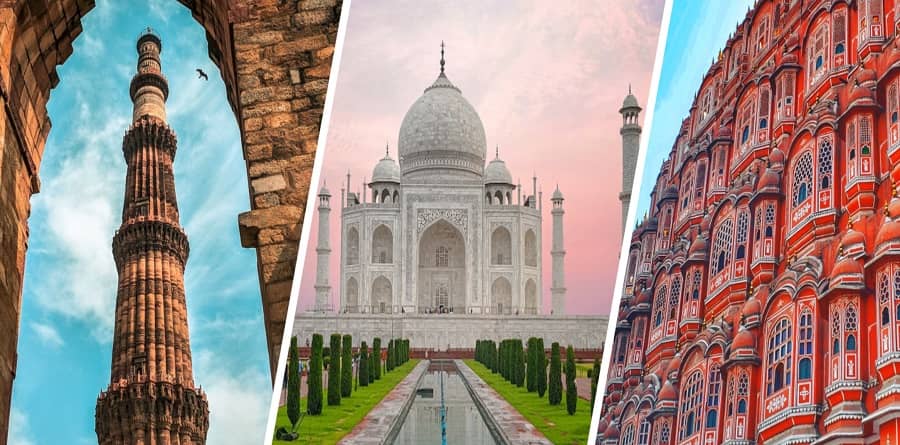
The Golden Triangle Tour in India is one of the most popular travel routes for tourists. Millions of travelers come every year to explore Delhi, Agra, and Jaipur. Most people know about the famous monuments like the Red Fort, Taj Mahal, and Amber Fort. But the Golden Triangle is more than just monuments. It has hidden stories, secret spots, local flavors, and cultural secrets that most travelers miss. In this article, we will explore hidden facts about the Golden Triangle Tour. These facts will help you see India in a new and exciting way.
Also Read: Best One-Day Trips from Delhi for Weekend Travelers
What Is the Golden Triangle Tour?
The Golden Triangle is a travel route that connects three major cities: Delhi, Agra, and Jaipur. Delhi is the capital of India and a busy metropolitan city. Agra is famous for the Taj Mahal, one of the seven wonders of the world. Jaipur, also called the Pink City, is known for its forts, palaces, and vibrant culture.
Travelers often take this tour for three to five days. It gives a taste of India’s history, architecture, and culture in a short time. People usually visit the main attractions and take photos. But there is more to the Golden Triangle than what appears on the surface. Choosing the right Golden Triangle Tour Package can make the experience even more memorable, with guided visits to hidden gems and local experiences.
The Golden Triangle Is Older Than You Think
Many travelers assume the Golden Triangle is a modern concept created for tourists. Actually, this route has existed for hundreds of years. Kings, traders, and pilgrims used these cities for travel, trade, and governance. Delhi was the seat of power for many empires, including the Mughals. Agra served as a capital for emperors and a center for art and architecture. Jaipur was a well-planned city built by Maharaja Sawai Jai Singh II in the 18th century.
The roads connecting these cities were once busy trade routes. Merchants carried spices, textiles, and precious stones along this triangle. Travelers today walk along roads that history shaped centuries ago.
Each City Represents a Different Era of India
One fascinating fact about the Golden Triangle is that each city reflects a different era of India.
-
Delhi shows India’s modern and medieval history. You see the Mughal architecture in Jama Masjid and the colonial influence in India Gate.
-
Agra represents the Mughal period. Taj Mahal, Agra Fort, and Fatehpur Sikri tell stories of art, power, and love.
-
Jaipur reflects the Rajput era. Its palaces, forts, and city layout reveal royal planning, traditions, and defense strategies.
Traveling through the Golden Triangle is like traveling through time. You see how India evolved from medieval kingdoms to the modern nation we know today.
There Are Secret Spots Beyond Famous Monuments
Most travelers focus on well-known sites. Few know that each city has secret spots that locals love.
-
In Delhi, Agrasen ki Baoli is a hidden stepwell in the heart of the city. It has stories of ancient water systems and architecture. Lodhi Garden hides tombs from the 15th century. These spots give a quiet escape from busy streets.
-
In Agra, Mehtab Bagh offers a perfect view of the Taj Mahal from across the river. It is less crowded and peaceful. The tiny markets of Agra also sell local handicrafts that tourists often miss.
-
In Jaipur, Panna Meena ka Kund is a hidden stepwell with beautiful geometry. Nahargarh Fort has secret spots with panoramic views of the city. Jaipur’s small alleys reveal local life that the main tourist routes do not show.
Exploring these hidden spots makes your Golden Triangle tour unique and memorable.
The Golden Triangle Was Designed for Royal Travel
Long before tourists came, the Golden Triangle had a special purpose. Kings, queens, and emperors traveled these cities in style. Delhi had royal courts, Agra had the emperor’s palace, and Jaipur had luxurious forts. Roads were designed for royal caravans, not for modern traffic.
Even today, some roads follow old royal paths. Travelers can feel the grandeur of history when visiting these cities. The architecture, gardens, and palaces reflect the tastes of kings. Knowing this history adds depth to your visit.
Food Tells a Deeper Story Than Monuments
Food is a hidden part of the Golden Triangle experience. Every city has a unique culinary identity.
-
Delhi offers Mughlai food like kebabs, biryani, and butter chicken. Street food like chaat, golgappa, and parathas tell stories of local life.
-
Agra is famous for petha, a sweet made from ash gourd. Agra also has Mughlai dishes that are rich and flavorful.
-
Jaipur serves Rajasthani thali, dal baati churma, and gatte ki sabzi. These dishes show how locals preserved food in the desert climate.
Eating local food connects you to the city’s culture. It tells stories of history, climate, and trade. Food lovers can explore hidden alleys and local markets to find authentic flavors.
Every City Has a Hidden Color Identity
Each city in the Golden Triangle has a color that defines it.
-
Delhi has earthy tones, with red sandstone monuments, beige buildings, and green gardens.
-
Agra is mostly white and red, with the Taj Mahal’s white marble and Agra Fort’s red sandstone.
-
Jaipur is famously pink. The city was painted pink to welcome the Prince of Wales in 1876.
Understanding these color identities gives travelers a new way to see the cities. The colors reflect history, architecture, and royal tastes.
The Golden Triangle Is Not Just a 3-Day Trip
Tourists often think the Golden Triangle can be explored in just three days. While it is possible, three days only scratch the surface.
-
You need extra time to explore hidden spots, markets, and local food.
-
Walking around small alleys and neighborhoods gives you a real sense of the city.
-
Visiting lesser-known attractions, like stepwells and old gardens, takes time but is rewarding.
A five to seven-day tour is better for experiencing the Golden Triangle beyond the famous monuments.
Local Markets Reveal the Real Culture
Markets are the heart of Indian cities. They show culture, tradition, and daily life.
-
Delhi has Chandni Chowk, where you see busy streets, street food, and shops selling everything from jewelry to spices.
-
Agra has Kinari Bazaar, selling handicrafts, textiles, and souvenirs. Local artisans make these products by hand.
-
Jaipur has Johari Bazaar and Bapu Bazaar, where you find jewelry, textiles, and traditional Rajasthani items.
Visiting markets gives you an authentic experience. You can talk to locals, see traditional crafts, and enjoy street food. It is a colorful and lively way to understand the city.
Best Time to Explore Hidden Sides of the Golden Triangle
The best time to explore the Golden Triangle depends on weather and crowds.
-
October to March is ideal. The weather is pleasant, making sightseeing comfortable.
-
Avoid summers (April to June) in Delhi and Jaipur. Temperatures can reach 45°C, making outdoor exploration difficult.
-
Monsoon season (July to September) is less crowded, but heavy rains can cause travel delays.
Planning your trip in the right season allows you to explore hidden spots, markets, and neighborhoods comfortably.
Tips to Experience the Golden Triangle Like a Local
-
Walk in small alleys: Many hidden spots and local food stalls are not near main roads. Walking helps you find them.
-
Try local transport: Take auto-rickshaws, cycle rickshaws, and local buses to feel the city like a resident.
-
Visit early in the morning: Famous monuments and secret gardens are peaceful in the morning.
-
Talk to locals: Shopkeepers, guides, and residents often share stories and secrets you won’t find online.
-
Take your time: Don’t rush. Spend time in markets, temples, and streets. Small details make the trip memorable.
-
Carry cash: Some local markets do not accept cards. Cash helps you buy small items from artisans.
-
Learn basic Hindi phrases: Locals appreciate tourists who try to speak in their language.
These tips help you explore the Golden Triangle more meaningfully.
Who Should Explore These Hidden Facts?
These hidden facts appeal to all travelers, not just history lovers.
-
First-time visitors will find new layers of culture beyond famous monuments.
-
Food lovers can explore local flavors and street food.
-
Photography enthusiasts will enjoy secret spots with fewer tourists.
-
History buffs can see how each city represents a different era.
-
Families and solo travelers will find quiet gardens, markets, and hidden attractions.
Even travelers who have visited the Golden Triangle before will discover something new.
Conclusion
The Golden Triangle Tour in India is more than just a route between Delhi, Agra, and Jaipur. It has hidden facts, secret spots, local flavors, and cultural stories waiting to be discovered. Each city represents a different era of India, with unique architecture, colors, and food. Exploring hidden gardens, local markets, and offbeat attractions makes the trip richer and memorable.
Next time you plan a Golden Triangle tour, take time to look beyond the famous monuments. Walk through alleys, talk to locals, try traditional food, and see the cities’ hidden sides. You will not only see India but feel it, taste it, and understand its history and culture.
The Golden Triangle is old, colorful, and full of secrets. Discovering these hidden facts will give you a tour experience that is unforgettable. Plan wisely, travel slowly, and explore like a local to truly enjoy this amazing journey through India.


Discover Modern Comfort: A Guide to Apartment Rent in Beirut
Beirut, the lively capital of Lebanon, is a city that blends deep-rooted history with a mo…



Discover Modern Comfort: A Guide to Apartment Rent in Beirut
Beirut, the lively capital of Lebanon, is a city that blends deep-rooted history with …