

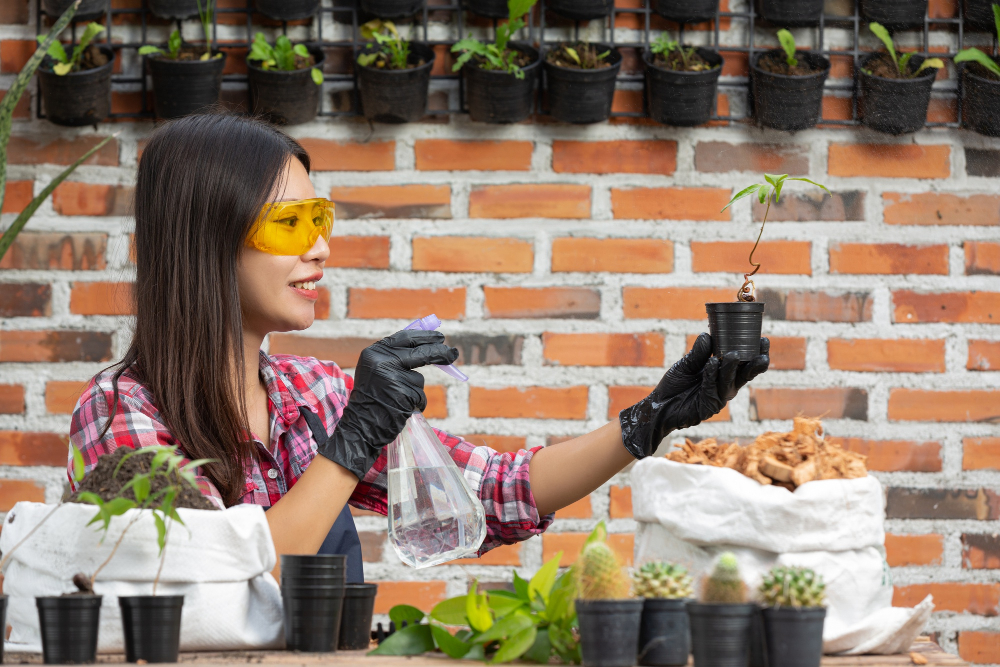
Greenhouse growing gives you control over temperature, light, and watering, but plant health still greatly depends on the potting mix. Container plants rely entirely on what sits in the pot. Many mixes work well at first, then drain too quickly and lose nutrients. Compost helps by improving structure, holding moisture longer, and supporting steady nutrient availability. It strengthens root health without acting like a fast, short-lived fertilizer.
If you use a composter, you can create compost from everyday scraps and use it to upgrade your greenhouse potting mix in a simple, repeatable way.
What Makes Greenhouse Potting Mix Different
A greenhouse potting mix has to do a lot at once. It needs to:
- Hold enough moisture so roots do not dry out quickly
- Drain well so roots do not sit in water
- Stay loose so air can move through the root zone
- Provide nutrients over time, not all at once
Many commercial mixes focus on being light and sterile. That helps with cleanliness and drainage. It also means the mix may not hold nutrients well. Water can move through quickly and carry nutrients out of the bottom of the pot. Plants then rely heavily on frequent feeding.
How Compost Improves Structure
Soil structure means how particles fit together. Good structure creates tiny air pockets for oxygen and tiny spaces that hold water. Bad structure turns into sludge when wet or dust when dry.
Compost improves structure in two important ways:
1) It helps the potting mix hold together without compacting
A mix with compost tends to stay crumbly rather than collapse into a dense block. This matters in greenhouses where you water often. Repeated watering can pack down a light mix over time. Compost helps prevent that.
2) It supports more even moisture.
Compost acts like a sponge, but not in the same way as peat or coco coir alone. It absorbs water and slowly releases it. That creates a more stable root environment. Plants stop swinging between “soaked” and “bone dry.”
When roots live in stable conditions, they grow deeper and branch more. That leads to stronger plants above ground.
How Compost Helps Nutrients Stay Available
Plants require nutrients, but they also need nutrients to stay in the pot long enough to use them. Many greenhouse growers see this problem when they water and fertilizer seems to “disappear.” That often happens because nutrients leach out.
Compost helps retain nutrients because it holds them and releases them gradually. This reduces washout and supports steady feeding.
Compost also improves how the potting mix handles fertilization. Instead of all nutrients flooding the roots at once, compost helps buffer the mix. That reduces stress and lowers the risk of overfeeding sensitive seedlings.
This matters even more when you use containers, grow bags, or trays, since they drain fast by design.
How Compost Supports Microbial Life
Most people think of compost as “plant food,” but its greatest strength often comes from its biological properties. Quality compost introduces beneficial microbes. These microbes help break down organic matter, making nutrients more readily available to plants.
In a greenhouse, microbial support matters because many potting mixes start off low in life. That keeps things clean and predictable, but it also means the mix lacks the natural biology that supports healthy roots.
Compost brings that missing piece back. It can help:
- Improve root development
- Support nutrient cycling in the pot
- Help plants handle stress from heat or transplanting
Where Compost Helps the Most in Greenhouse Growing
Compost makes the biggest difference in a few common greenhouse situations:
Seed starting and potting up
Young roots need consistent moisture and gentle nutrition. Compost can add stability, especially when seedlings move into larger pots.
Container vegetables and herbs
Tomatoes, peppers, basil, and greens need steady feeding. Compost supports longer-term growth without constant corrections.
Houseplants overwintered in a greenhouse
Plants that stay in pots for months benefit from a mix that holds nutrients and stays breathable.
This is where your basic greenhouse supplies, like pots, trays, soil blocks, and grow bags, work better when the growing media stays stable.
Conclusion
Compost strengthens the structure of potting mix, improves nutrient retention, and supports healthy microbial life. These benefits lead to steadier moisture and stronger roots. Using a composter makes it easier to add compost regularly and maintain a stable greenhouse growing system season after season.


Discover Modern Comfort: A Guide to Apartment Rent in Beirut
Beirut, the lively capital of Lebanon, is a city that blends deep-rooted history with a mo…



Discover Modern Comfort: A Guide to Apartment Rent in Beirut
Beirut, the lively capital of Lebanon, is a city that blends deep-rooted history with …