

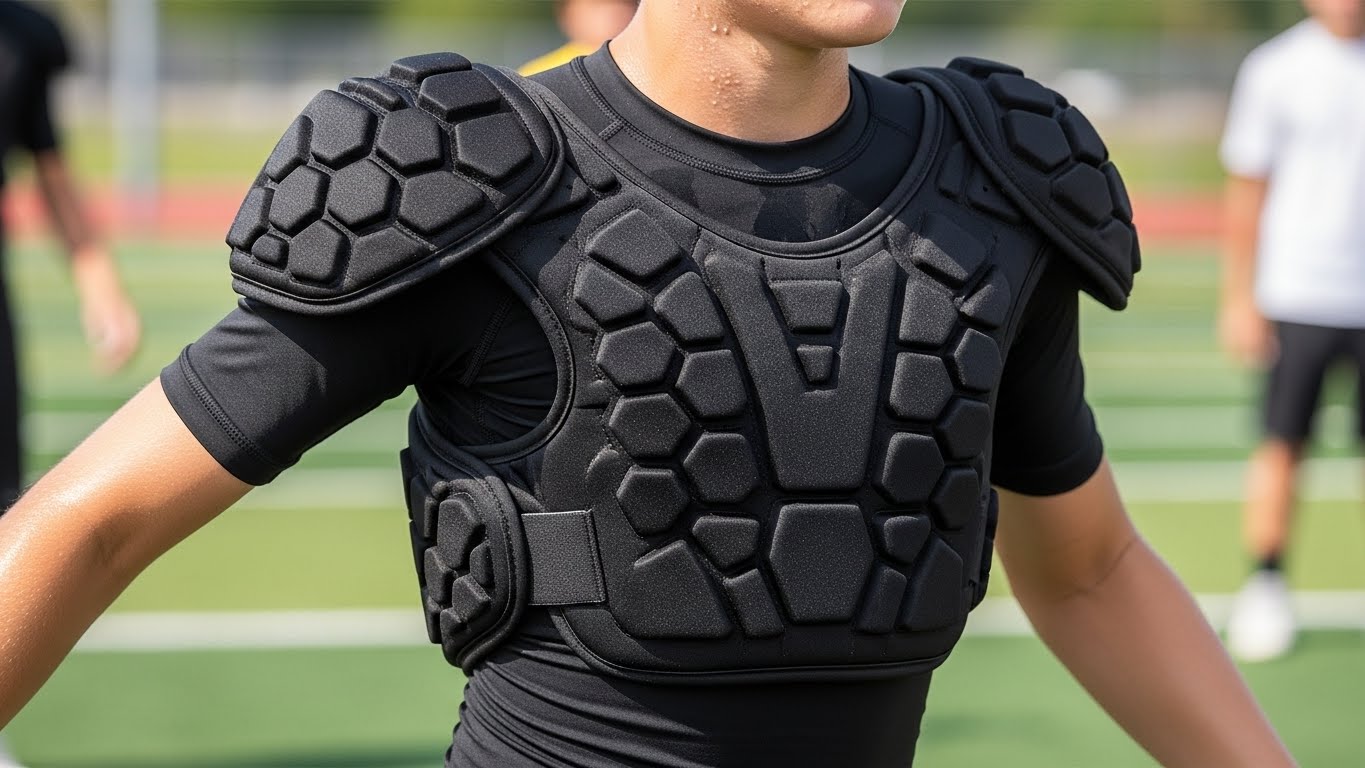
The protective equipment worn by youth athletes has undergone a remarkable transformation as material science and biomechanical understanding have advanced. Among the most significant innovations are youth padded compression shirts, which represent a sophisticated integration of two distinct protective technologies—compression fabrics and impact-absorbing padding. The synergy between these elements creates equipment that provides superior protection, enhances athletic performance, and addresses the unique physiological needs of developing athletes. Understanding how compression and padding work together reveals why these integrated systems have largely replaced traditional layered approaches to torso protection in youth contact sports.
The Dual Function of Compression Fabric
Compression technology in youth padded compression shirts serves purposes that extend far beyond simply holding padding in place, though that function is certainly important. The tight-fitting elastic fabric creates consistent, graduated pressure against the body that produces measurable physiological and biomechanical effects that enhance both protection and performance.
From a protective standpoint, compression reduces soft tissue oscillation during impacts. When an athlete experiences a collision, muscles and other soft tissues vibrate and deform, absorbing energy but also potentially suffering microscopic damage that accumulates into injury over time. Compression fabric dampens this oscillation, limiting tissue deformation and reducing the cumulative microtrauma youth athletes experience during contact sports seasons.
Research published in the Journal of Science and Medicine in Sport measured muscle damage markers in athletes wearing compression garments versus those in conventional clothing during contact activities. The compression group showed 31% lower creatine kinase levels—a biomarker of muscle damage—and reported significantly less muscle soreness 24-48 hours post-activity. For youth athletes whose bodies are still developing, this reduction in tissue trauma represents meaningful injury prevention.
Beyond damage reduction, compression provides proprioceptive enhancement—improved awareness of body position and movement. This heightened sensory feedback helps young athletes maintain better body control during dynamic movements, potentially allowing them to better protect themselves instinctively during contact situations. Studies in motor control demonstrate that compression garments improve joint position sense by approximately 15-20%, a difference that translates to measurably better balance and coordination.
Strategic Padding Placement Based on Impact Analysis
The padding integrated into youth padded compression shirts isn’t randomly distributed but rather strategically positioned based on injury data analysis and biomechanical research identifying high-risk impact zones. This evidence-based placement ensures protection focuses on areas where youth athletes most commonly experience potentially injurious impacts.
Shoulder padding represents the most critical protection zone, positioned to cover the acromion, clavicle, and surrounding soft tissue. Shoulder injuries account for approximately 20% of all youth football injuries according to data from the National Athletic Trainers’ Association, making comprehensive shoulder protection a priority. The padding placement extends slightly beyond the bony prominences to protect surrounding muscles and connective tissues that can suffer contusions even when bones remain uninjured.
Rib and sternum padding addresses lateral and frontal torso impacts. Youth athletes’ developing rib cages have greater flexibility than adult structures, which provides some inherent injury resistance but also means that ribs can deform significantly during impacts, potentially causing internal organ compression. Padding positioned over the lower ribs and sternum absorbs impact energy before it deforms the thoracic cage, reducing both rib injury risk and the potential for underlying organ trauma.
Spine padding along the thoracic and upper lumbar regions protects against impacts during falls and collisions where athletes land on their backs. While serious spinal injuries remain relatively rare in youth sports, contusions and soft tissue injuries to the back are common and can sideline athletes for extended periods. The posterior padding in youth padded compression shirts provides coverage that traditional shoulder pads often miss, particularly in the lower thoracic and upper lumbar regions where shoulder pad coverage terminates.
The Compression-Padding Interface
The most sophisticated aspect of youth padded compression shirts involves how compression fabric and padding elements work together as an integrated protective system rather than merely coexisting as separate components. The compression fabric’s tension against the body creates a pre-loaded system where padding is already under slight compression before any impact occurs.
This pre-compression has important protective implications. When an impact strikes padding that’s already compressed against the body, the foam’s energy absorption begins immediately at higher density regions of the compression curve where foam is most effective at managing energy. Loose-fitting padding, by contrast, must first compress through less-effective low-density regions before reaching optimal absorption zones, reducing overall protective efficiency.
The compression fabric also ensures padding remains precisely positioned over vulnerable anatomical structures regardless of how vigorously athletes move. Traditional padding systems that rely on pocket-based retention frequently shift during play, leaving areas exposed when protection is needed most. The continuous tension compression fabric provides prevents this migration, maintaining protective coverage throughout entire practices and games.
Additionally, the fabric-padding integration distributes impact forces beyond the padded zones. When a collision strikes a padded area, some energy transmits through and around the padding into the compression fabric, which distributes these forces across wider surface areas. This distribution reduces peak pressure concentrations, lowering injury risk even from impacts that exceed padding absorption capacity.
Multi-Density Foam Systems and Compression Interaction
Modern youth padded compression shirts typically incorporate multi-density foam padding systems where different foam layers serve specific functions. Understanding how compression affects these layered systems reveals the sophistication of contemporary protective equipment design.
The outermost foam layer in contact with the compression fabric generally uses lower-density material (20-30 kg/m³) that compresses easily under the fabric’s tension. This soft layer provides comfort against skin and absorbs minor impacts during normal activity. The compression fabric prevents this soft foam from being permanently compressed by the garment tension through the elastic recovery—the fabric stretches slightly to accommodate the foam while maintaining sufficient tension to hold everything in place.
Middle foam layers use moderate density (40-60 kg/m³) engineered to manage the impacts youth athletes most commonly experience—tackles, falls, and collisions during practice and games. The compression fabric pre-loads these layers to their optimal working density range where energy absorption efficiency peaks. Without compression, these foam layers might be too soft in their relaxed state to provide optimal protection, but the fabric tension brings them into ideal density ranges for impact management.
Inner foam layers adjacent to the body employ higher density material (60-80 kg/m³) that prevents bottoming out during severe impacts. These layers only engage during the most violent collisions, ensuring that even worst-case impacts receive adequate energy absorption. The compression fabric helps stabilize these firm layers, preventing them from feeling uncomfortable during normal wear when they’re not actively absorbing impacts.
Thermal Management Through Integrated Design
One challenge protective equipment presents involves heat retention that can degrade performance and create safety concerns, particularly for youth athletes whose thermoregulatory systems are still developing. The integration of compression technology and padding in youth padded compression shirts addresses this challenge through carefully engineered thermal management features.
Compression fabrics in quality systems use moisture-wicking polyester or nylon blends that actively transport sweat away from skin through capillary action. The fabric’s tight fit maximizes surface contact for efficient moisture transfer, while the material’s hydrophobic properties ensure sweat moves to the fabric’s exterior surface where it can evaporate. This active moisture management keeps young athletes drier and more comfortable than traditional cotton-based undergarments that absorb and retain moisture.
Padding placement intentionally avoids covering areas where major blood vessels pass close to skin surfaces—locations where heat dissipation primarily occurs. The areas between padding zones allow substantial portions of the torso to remain in direct contact with only the breathable compression fabric, preserving heat dissipation capacity while maintaining protection over vulnerable anatomical structures.
Some advanced youth padded compression shirts incorporate mesh panels in strategic locations—typically under the arms and along the sides—where impact risk is minimal but heat accumulation tends to be high. These mesh zones, reinforced with compression properties, maintain the garment’s supportive fit while dramatically enhancing ventilation and cooling capacity.
Size Optimization and Growth Accommodation
Youth athletes present unique sizing challenges since their bodies are constantly growing and changing. The compression-padding integration in youth padded compression shirts must maintain effectiveness across the size range an athlete might experience during a season while remaining comfortable and protective.
Quality manufacturers develop sizing systems based on comprehensive anthropometric data from youth populations, ensuring that compression levels remain appropriate across the full size range. A compression shirt that’s too tight restricts breathing and movement while potentially cutting off circulation. One that’s too loose fails to provide compression benefits and allows padding to shift away from protected zones.
The elastic properties of compression fabrics provide some accommodation for growth—a properly fitted youth padded compression shirt typically remains effective through 2-3 inches of height growth or 10-15 pounds of weight change. Beyond these ranges, sizing adjustments become necessary to maintain optimal compression and padding positioning. This growth accommodation makes compression shirts more cost-effective than rigid equipment requiring replacement with even modest size changes.
Integration with External Protective Equipment
Youth padded compression shirts function both as standalone protection for sports with minimal equipment requirements (like flag football or 7-on-7 leagues) and as supplemental protection beneath traditional hard-shell equipment. Understanding how compression and padding work with external equipment reveals additional protective benefits these integrated systems provide.
When worn beneath shoulder pads, the compression shirt’s padding fills gaps traditional equipment leaves exposed—particularly in the lower rib, sternum, and lower back regions where shoulder pad coverage typically ends. The compression fabric prevents the padding from bunching or shifting when shoulder pads are donned, maintaining consistent protection across the interface between external and integrated equipment.
The compression also improves the fit of external equipment by eliminating loose clothing that allows shoulder pads to shift and rotate during play. Traditional t-shirts or jerseys bunch and twist beneath shoulder pads, creating pressure points and allowing equipment migration that compromises protection. The youth padded compression shirt’s snug fit eliminates this excess material, helping external equipment remain properly positioned throughout competition.
Durability Considerations in Integrated Systems
The permanent integration of padding with compression fabric in youth padded compression shirts requires careful attention to durability since the entire garment must be laundered as a unit. Quality systems address this challenge through material selection and construction techniques that ensure both fabric and padding maintain properties through dozens of washing cycles.
Compression fabrics use high-grade elastane (spandex/Lycra) that retains elastic recovery through 100+ wash cycles when properly cared for. Lower-quality elastanes lose tension after 20-30 washings, causing the garment to become loose and ineffective. The padding attachment methods—typically high-strength adhesive bonding or integrated pocket systems—must withstand repeated washing without separation or padding migration.
Foam materials require selection for hydrolysis resistance, ensuring they don’t degrade from moisture exposure during washing. Open-cell foams that promote ventilation during wear must be engineered to shed water quickly during washing and drying, preventing the extended drying times that would make compression shirts impractical for programs with limited equipment quantities.
Cost-Benefit Analysis for Youth Programs
Youth padded compression shirts represent significant equipment investments for programs and families, typically costing $40-80 for quality models. Understanding the protection and performance benefits these integrated systems provide helps contextualize this investment compared to alternatives.
Traditional layered approaches—separate undershirts, rib protectors, and shoulder pad systems—might have similar aggregate costs but provide inferior protection due to shifting and gap problems. The integrated compression-padding approach consolidates multiple protective functions into a single garment that maintains consistent positioning and provides synergistic benefits neither technology achieves independently.
The injury prevention value provides additional cost justification. Youth sports injuries cost American families approximately $1.8 billion annually in emergency department visits according to CDC data, not including follow-up care, rehabilitation, or lost participation time. Equipment that demonstrably reduces injury incidence—as compression-padding integration does—represents prudent investment that can avoid far larger medical and personal costs.
Performance Enhancement Beyond Protection
While protection represents the primary purpose of youth padded compression shirts, the performance benefits compression provides shouldn’t be overlooked. The improved proprioception, reduced muscle oscillation, and enhanced blood flow that compression fabrics provide translate to measurably better athletic performance independent of protective functions.
Studies examining compression garment effects on youth athletes show modest but statistically significant improvements in sprint times, agility performance, and sustained effort capacity. While these advantages are secondary to safety benefits, they provide additional value that makes compression shirts attractive to performance-oriented athletes and programs.
Conclusion
The integration of compression technology and strategic padding placement in youth padded compression shirts represents sophisticated sports equipment engineering that addresses the unique needs of developing athletes. By combining the protective benefits of impact-absorbing padding with the physiological and biomechanical advantages of compression fabric, these systems provide comprehensive protection that isolated technologies cannot match.
Understanding how these elements work together—how compression pre-loads padding for optimal energy absorption, maintains precise positioning over vulnerable areas, distributes impact forces broadly, and enhances proprioceptive feedback—reveals why integrated systems have become standard equipment for youth contact sports. As material science continues advancing and our understanding of youth athlete physiology deepens, the synergy between compression and padding will only grow more sophisticated, promising continued improvements in both safety and performance for young athletes across all contact sports.


Discover Modern Comfort: A Guide to Apartment Rent in Beirut
Beirut, the lively capital of Lebanon, is a city that blends deep-rooted history with a mo…



Discover Modern Comfort: A Guide to Apartment Rent in Beirut
Beirut, the lively capital of Lebanon, is a city that blends deep-rooted history with …