

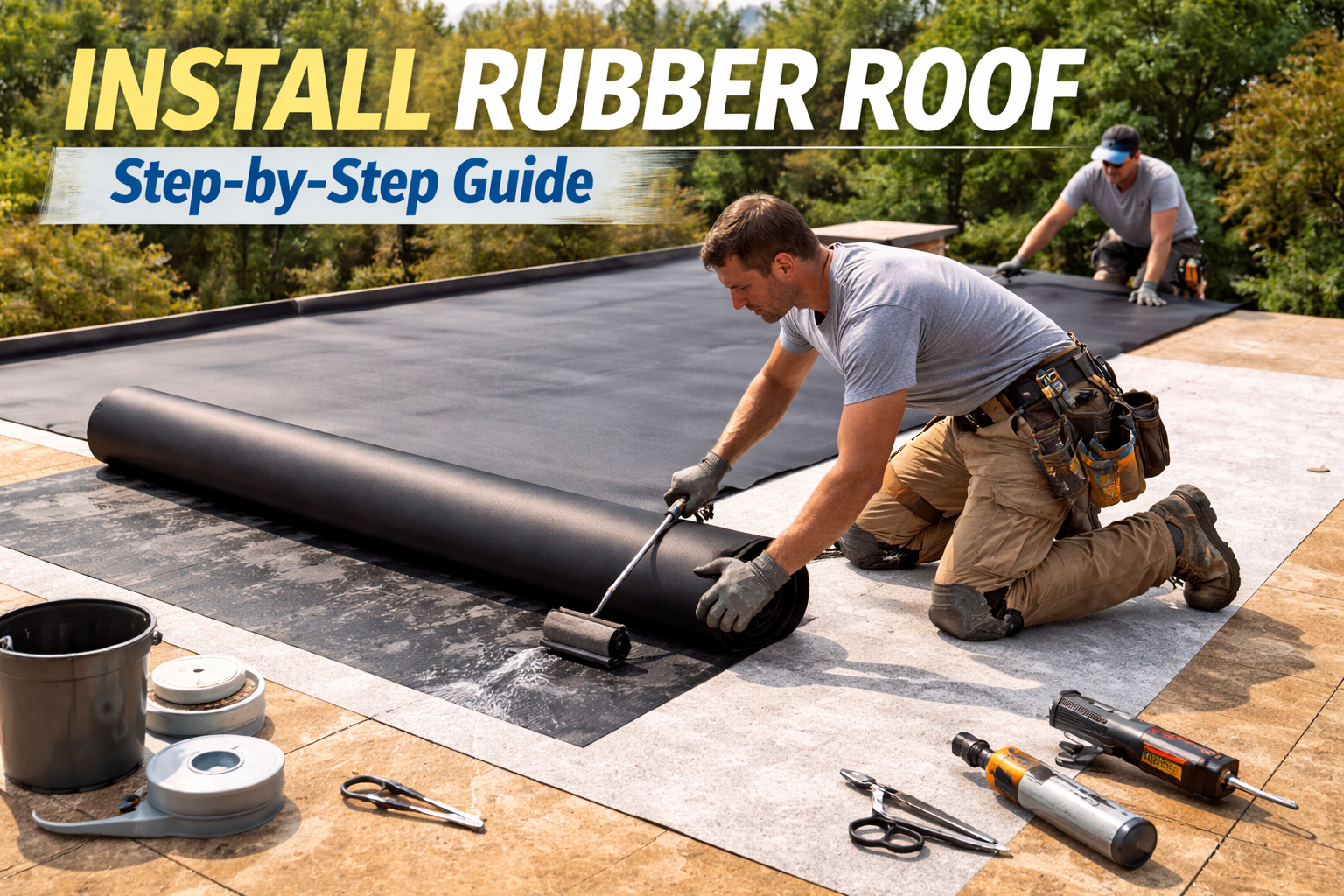
I still remember my first rubber flat roof installation like it was yesterday.
Cold morning. Concrete deck. EPDM sheet flapping like a sail in the wind.
That job taught me more than any manual ever could.
If you want to install a rubber roof properly—and make it last decades—you need more than instructions.
You need timing, surface prep discipline, and respect for the material.
This guide blends field-tested experience with modern EPDM application best practices.
Why EPDM Is Still the Gold Standard
After installing dozens of systems, I can say this confidently: EPDM survives abuse.
Heat. Ice. Standing water. Foot traffic.
Few materials forgive mistakes the way rubber does.
Installing EPDM rubber roofing is popular because it stretches without tearing and seals reliably.
That flexibility saves roofs when buildings move—and they always do.
Tools and Materials You Actually Need
Before you start installing rubber roof systems, stage everything.
Walking across wet adhesive ruins more jobs than bad measurements.
You’ll need:
-
EPDM membrane
-
Bonding adhesive
-
Roller or stiff push broom
-
Utility knife with hooked blades
-
Seam tape and primer
I prefer Firestone products for consistency during Firestone EPDM rubber roofing installation.
Step 1: Deck Preparation (Where Most Fail)
No EPDM install survives a dirty deck.
Period.
Sweep. Scrape. Vacuum if needed.
I once redid a roof because a single drywall screw punctured the membrane months later.
For successful epdm roofing installation details, the surface must be:
-
Dry
-
Smooth
-
Structurally sound
Step 2: Dry Fit the Membrane
Always dry-fit before adhesive.
Always.
Roll out the membrane and let it relax for at least 30 minutes.
This step makes fitting EPDM roof seams predictable.
Skipping this causes wrinkles you’ll never fully remove later.
Step 3: EPDM Application – Adhesive Technique Matters
Here’s where craftsmanship shows.
Fold half the membrane back.
Apply adhesive evenly to both surfaces.
Wait until tacky—not wet.
When applying EPDM rubber roofing, patience beats speed every time.
I use the “knuckle test”—if it sticks without stringing, you’re ready.
Step 4: Laying the Membrane Smoothly
Roll the membrane into place slowly.
Use steady pressure with a broom or roller.
Air pockets are silent killers in epdm install jobs.
They expand in heat and stress seams.
Work from the center outward.
Always.
Step 5: Repeat for the Second Half
Fold back the remaining half and repeat the process.
Consistency matters more than muscle here.
I’ve trained crews who rushed this step—and paid for it with callbacks.
Installing EPDM is calm work, not aggressive work.
Step 6: Seams, Edges, and Details
Seams fail roofs—not membranes.
Prime seam areas thoroughly.
Apply seam tape evenly.
Roll it firmly.
This is where most epdm rubber roofing installation mistakes happen.
Rushed seams equal leaks office 365 consultant.
Step 7: Penetrations and Flashings
Pipes, drains, and edges demand attention.
Never improvise flashing.
Use pre-molded accessories whenever possible.
On one warehouse job, custom flashing saved thousands in future repairs.
Installing EPDM roofing properly means respecting details more than large surfaces.
Step 8: Final Inspection (Don’t Skip This)
Walk the roof slowly.
Look for fish-mouths, bubbles, loose edges.
I inspect twice—once immediately, once the next day.
Thermal movement reveals hidden issues.
This habit has saved my reputation more than once.
Common Mistakes I Still See
Even experienced crews slip.
-
Adhesive applied too thick
-
Membrane laid too soon
-
Poor seam pressure
Every failure I’ve repaired came down to fundamentals ignored during installing EPDM.
How Long Does a Rubber Roof Last?
Properly installed systems routinely exceed 30 years.
I still inspect EPDM roofs I installed in the early 2000s.
That longevity only happens when you install a rubber roof correctly the first time.
When DIY Makes Sense (And When It Doesn’t)
Small sheds? Yes.
Garages? Maybe.
Commercial roofs or complex drains? Call a pro.
I’ve repaired too many “DIY success stories” gone wrong.
Final Thoughts From the Field
EPDM rewards patience.
It punishes shortcuts.
If you respect surface prep, adhesive timing, and seam integrity, installing rubber roof systems becomes predictable and profitable.
Discover Modern Comfort: A Guide to Apartment Rent in Beirut
Beirut, the lively capital of Lebanon, is a city that blends deep-rooted history with a mo…



Discover Modern Comfort: A Guide to Apartment Rent in Beirut
Beirut, the lively capital of Lebanon, is a city that blends deep-rooted history with …