

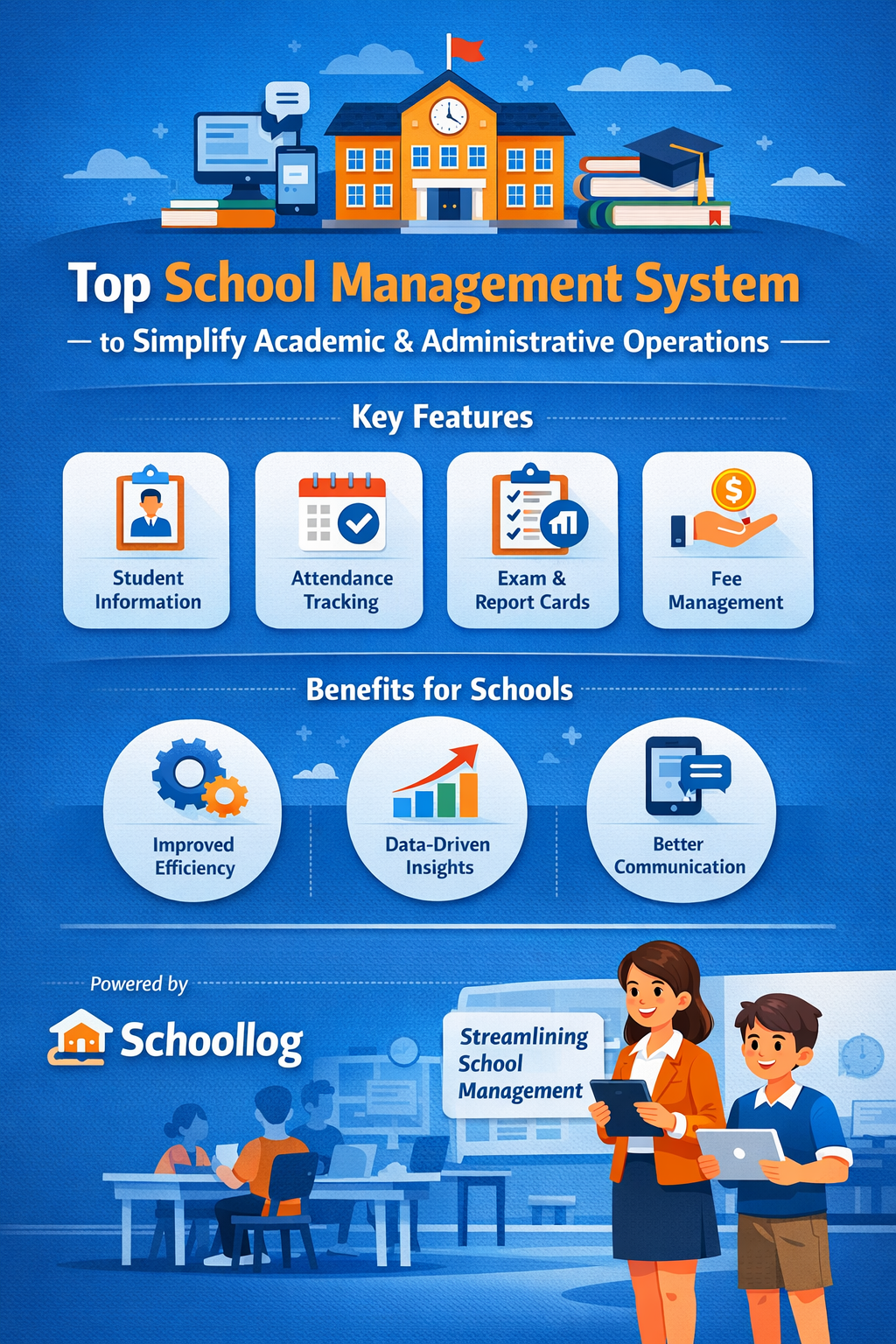
Managing a modern educational institution involves far more than classrooms and examinations. Schools today are responsible for handling admissions, attendance, academics, fees, staff coordination, communication, compliance, and parent engagement—often all at once. This is where a School management system becomes an essential digital backbone, helping institutions replace fragmented manual processes with a unified, intelligent platform.
As schools grow in size and complexity, technology-driven management is no longer a luxury. It has become a practical necessity for improving efficiency, transparency, and overall educational outcomes.
Why Schools Are Shifting Toward Digital Management Systems
Educational institutions across the globe are embracing digital transformation, not because it is trendy, but because it solves real operational problems. Manual record-keeping, spreadsheets, and disconnected software tools often lead to data errors, delays, and communication gaps.
International education bodies such as UNESCO and OECD have repeatedly emphasized the role of digital systems in improving administrative efficiency and institutional accountability. Well-implemented school management platforms help schools focus less on paperwork and more on learning quality.
What Is a School Management System?
A school management system is a centralized software solution designed to automate and integrate academic and administrative processes. Instead of using multiple tools for different departments, schools can manage everything through a single dashboard.
Core Objectives of a School Management System
- Reduce administrative workload
- Improve data accuracy and accessibility
- Enhance communication between stakeholders
- Support data-driven decision-making
- Ensure operational transparency
Key Features of a Top School Management System
Not all platforms deliver the same value. A top-tier system stands out through thoughtful design, reliability, and scalability.
1. Academic Management
Academic modules help schools manage timetables, curriculum planning, lesson schedules, homework, exams, grading, and report cards. Teachers can update academic records in real time, ensuring consistency and accuracy.
2. Student Information System
A centralized student database stores admission details, attendance records, academic history, behavior notes, and health information. This structured approach eliminates duplicate records and reduces errors.
3. Fee & Finance Management
Automated fee collection, online payment gateways, GST-compliant invoicing, and financial reports simplify accounting. According to studies published by EdTech Review, schools using digital fee systems experience fewer payment delays and better financial tracking.
4. Attendance & Biometric Integration
Digital attendance systems, often integrated with biometric devices or RFID cards, ensure accurate tracking of student and staff presence while minimizing manual intervention.
5. Communication & Parent Engagement
Built-in messaging, mobile app notifications, circulars, and announcements keep parents informed and involved. Strong communication improves trust and reduces misunderstandings.
Administrative Benefits Beyond Automation
While automation is a clear advantage, the deeper value lies in visibility and control.
Improved Decision-Making
With access to structured reports and dashboards, school leaders can analyze attendance trends, academic performance, and financial health—enabling informed planning rather than guesswork.
Regulatory Compliance
Many school systems support compliance with education board requirements, audit readiness, and documentation standards, which is especially important for CBSE, ICSE, and state board schools in India.
Role of AI and Smart Technology in Modern School Systems
Modern platforms increasingly incorporate artificial intelligence to support learning and administration. AI-assisted analytics help identify performance gaps, while smart tools assist teachers in creating assessments and tracking progress more efficiently.
Research from organizations such as World Economic Forum highlights how responsible use of AI in education can enhance productivity without replacing human judgment.
SchoolLog: A Practical Example of a Modern School Management System
Among the emerging platforms in this space, SchoolLog demonstrates how schools can adopt technology without unnecessary complexity. Designed with real institutional workflows in mind, SchoolLog focuses on balancing academic control with administrative simplicity.
What Makes SchoolLog Relevant
- Unified academic and administrative modules
- User-friendly dashboards for teachers, parents, and administrators
- Integrated communication and reporting tools
- Scalable architecture suitable for growing institutions
Rather than overwhelming users with features, SchoolLog emphasizes usability, helping schools transition smoothly from manual processes to digital operations.
How to Choose the Right School Management System
Before selecting a platform, schools should evaluate their needs carefully.
Key Selection Criteria
- Ease of use for non-technical staff
- Data security and privacy standards
- Customization based on school size and board
- Reliable customer support and onboarding
- Long-term scalability
Independent reviews from education technology platforms and feedback from existing users often provide valuable real-world insights.
Future of School Management Systems
The future points toward more integrated, mobile-first, and analytics-driven platforms. Cloud deployment, real-time insights, and personalized learning support will continue to shape how schools operate.
Institutions that invest in adaptable systems today are better prepared for tomorrow’s academic and administrative challenges.
Conclusion
A top school management system is not just a software tool—it is a strategic asset. By simplifying academic workflows, strengthening administrative control, and improving communication, these platforms help schools operate more efficiently and transparently.
Solutions like SchoolLog highlight how thoughtful technology can support educators rather than distract them. As education continues to evolve, schools that embrace well-designed digital systems will be better positioned to deliver consistent quality, accountability, and growth.

Discover Modern Comfort: A Guide to Apartment Rent in Beirut
Beirut, the lively capital of Lebanon, is a city that blends deep-rooted history with a mo…



Discover Modern Comfort: A Guide to Apartment Rent in Beirut
Beirut, the lively capital of Lebanon, is a city that blends deep-rooted history with …