

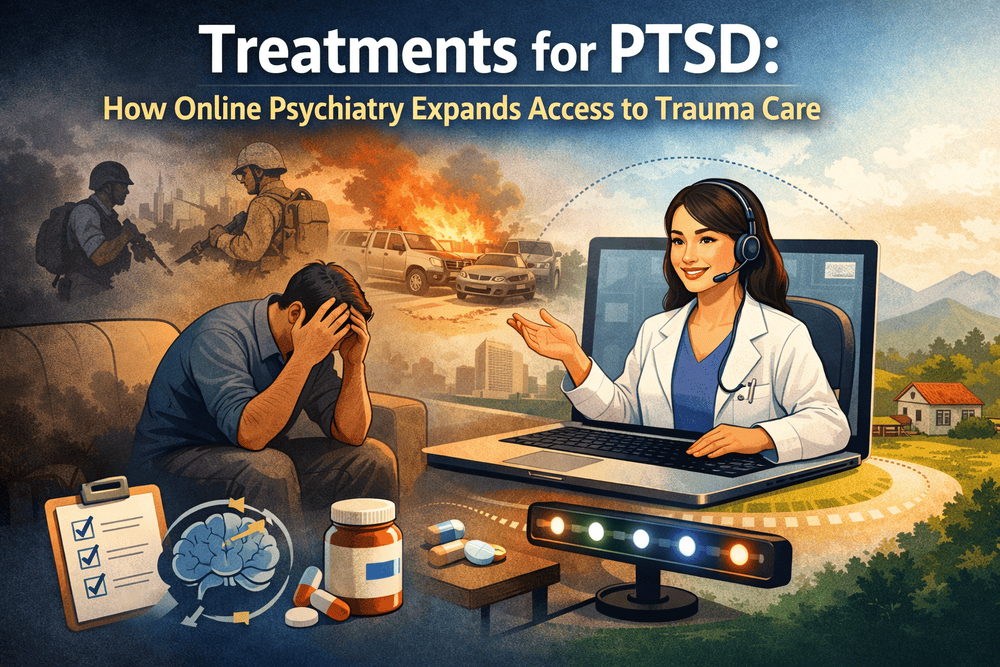
Post-traumatic stress disorder (PTSD) is a complex mental health condition that can affect individuals after experiencing or witnessing traumatic events such as accidents, violence, natural disasters, military combat, or prolonged emotional abuse. While PTSD is highly treatable, many people struggle to access timely and effective care due to stigma, geographic barriers, or limited availability of specialists. Today, online psychiatry is transforming how people receive evidence-based treatments for PTSD, making trauma care more accessible, flexible, and patient-centered than ever before.
This article explores the most effective treatments for PTSD and explains how online psychiatric services are breaking down barriers to trauma-focused mental health care.
Understanding PTSD and Its Impact
PTSD is more than just a reaction to stress. It is a clinically recognized mental health condition that can significantly disrupt daily functioning, relationships, work performance, and overall quality of life.
Common Symptoms of PTSD
PTSD symptoms are typically grouped into four categories:
- Intrusive symptoms such as flashbacks, nightmares, or distressing memories
- Avoidance behaviors, including avoiding reminders of the trauma
- Negative changes in mood and thinking, such as guilt, emotional numbness, or persistent fear
- Heightened arousal, including irritability, hypervigilance, and sleep disturbances
Without proper treatment, these symptoms may worsen over time. Fortunately, evidence-based treatments for PTSD are highly effective when delivered by trained mental health professionals.
Why Early and Consistent Treatment Matters
Untreated PTSD can lead to complications such as depression, anxiety disorders, substance misuse, and physical health issues. Early intervention improves outcomes by helping individuals process trauma safely, reduce symptom severity, and regain control over their lives.
However, many people delay seeking help due to lack of access or fear of judgment. This is where online psychiatry plays a vital role in expanding trauma care.
Evidence-Based Treatments for PTSD
Modern psychiatry offers several proven approaches for treating PTSD. Treatment plans are often tailored to each individual’s symptoms, history, and preferences.
Trauma-Focused Psychotherapy
Trauma-focused therapy is considered the first-line approach among treatments for PTSD. These therapies help individuals process traumatic memories in a structured and supportive environment.
Cognitive Processing Therapy (CPT)
CPT focuses on identifying and changing unhelpful beliefs related to trauma. Patients learn how trauma has influenced their thoughts and emotions and develop healthier perspectives over time.
Prolonged Exposure Therapy (PE)
PE involves safely confronting trauma-related memories and situations rather than avoiding them. Repeated exposure reduces fear responses and emotional distress.
Eye Movement Desensitization and Reprocessing (EMDR)
EMDR uses guided eye movements or other bilateral stimulation to help the brain reprocess traumatic memories. Many patients experience symptom relief without needing to describe their trauma in detail.
Medication-Based Treatments
Medication may be recommended as part of comprehensive treatments for PTSD, particularly for individuals experiencing severe anxiety, depression, or sleep problems.
Common medication options include:
- Selective serotonin reuptake inhibitors (SSRIs)
- Serotonin-norepinephrine reuptake inhibitors (SNRIs)
- Sleep-supporting medications for trauma-related insomnia
Medications are typically prescribed and monitored by psychiatrists, often in combination with psychotherapy for optimal outcomes.
Adjunct and Supportive Therapies
Additional therapies may support recovery when used alongside core PTSD treatments:
- Mindfulness-based stress reduction
- Psychoeducation about trauma responses
- Relaxation and grounding techniques
- Lifestyle-focused interventions such as sleep hygiene and stress management
These approaches help individuals develop coping skills and improve emotional regulation.
How Online Psychiatry Is Transforming PTSD Treatment
Online psychiatry has emerged as a powerful solution for individuals seeking accessible and flexible treatments for PTSD. By using secure video consultations and digital platforms, patients can receive professional care without traditional barriers.
Improved Access to Trauma Specialists
Many regions lack psychiatrists trained in trauma-focused care. Online psychiatry connects individuals with experienced professionals regardless of location, reducing wait times and improving treatment continuity.
Greater Comfort and Privacy
Receiving care from home can feel safer for individuals with trauma-related anxiety or avoidance symptoms. Online sessions allow patients to engage in therapy in a familiar environment, which may enhance openness and engagement.
Flexible Scheduling
PTSD symptoms can interfere with work, caregiving responsibilities, or transportation. Online psychiatry offers flexible appointment options, making it easier to attend regular sessions.
Reduced Stigma
Some individuals hesitate to seek in-person mental health care due to fear of judgment. Online services provide a discreet pathway to evidence-based treatments for PTSD without social pressure.
Effectiveness of Online Treatments for PTSD
Research consistently shows that trauma-focused therapies delivered online can be just as effective as in-person treatment when conducted by qualified professionals.
Benefits of online PTSD treatment include:
- Comparable symptom reduction
- High patient satisfaction rates
- Improved treatment adherence
- Lower dropout rates for some populations
For many individuals, online psychiatry is not a compromise, it is an enhancement of care.
Who Can Benefit from Online PTSD Treatment?
Online treatments for PTSD are suitable for a wide range of individuals, including:
- Adults with recent or long-term trauma
- Survivors of accidents, abuse, or violence
- First responders and healthcare workers
- Veterans and military families
- Individuals living in rural or remote areas
However, individuals experiencing acute crises may still require in-person or emergency services. A psychiatric assessment helps determine the most appropriate care pathway.
Personalized Care Through Online Psychiatry
One of the strengths of online psychiatry is its ability to deliver personalized, ongoing care. Psychiatrists can adjust treatment plans, monitor medication responses, and provide regular follow-ups through secure platforms.
Services like HelloDoc demonstrate how digital psychiatry can integrate professional expertise with modern technology to support trauma recovery while maintaining high clinical standards.
Overcoming Common Myths About PTSD Treatment
“PTSD can’t be treated online”
Evidence shows that structured online therapy is highly effective, especially for cognitive and trauma-focused approaches.
“Talking about trauma makes it worse”
When guided by trained professionals, trauma therapy is safe and designed to reduce distress not intensify it.
“Medication is the only solution”
While medication can help, psychotherapy remains the cornerstone of long-term recovery for most individuals.
Choosing the Right Online Psychiatry Provider
When seeking online treatments for PTSD, consider the following factors:
- Experience in trauma-focused care
- Availability of evidence-based therapies
- Secure and confidential platforms
- Clear communication and follow-up options
- Integration of therapy and medication management
Selecting a provider with psychiatric expertise ensures safe, effective, and ethical care.
The Future of PTSD Care
As mental health awareness grows, online psychiatry will continue to play an essential role in expanding access to trauma care. Advances in digital health, combined with evidence-based treatments for PTSD, are empowering individuals to seek help earlier and recover more fully.
Trauma does not have to define a person’s future. With the right support, healing is possible.
Final Thoughts
PTSD is a serious but treatable condition. Today’s evidence-based treatments for PTSD, combined with the accessibility of online psychiatry, are reshaping how trauma care is delivered. By removing geographic, social, and logistical barriers, online psychiatric services offer hope to individuals who may otherwise go untreated.


Discover Modern Comfort: A Guide to Apartment Rent in Beirut
Beirut, the lively capital of Lebanon, is a city that blends deep-rooted history with a mo…



Discover Modern Comfort: A Guide to Apartment Rent in Beirut
Beirut, the lively capital of Lebanon, is a city that blends deep-rooted history with …