

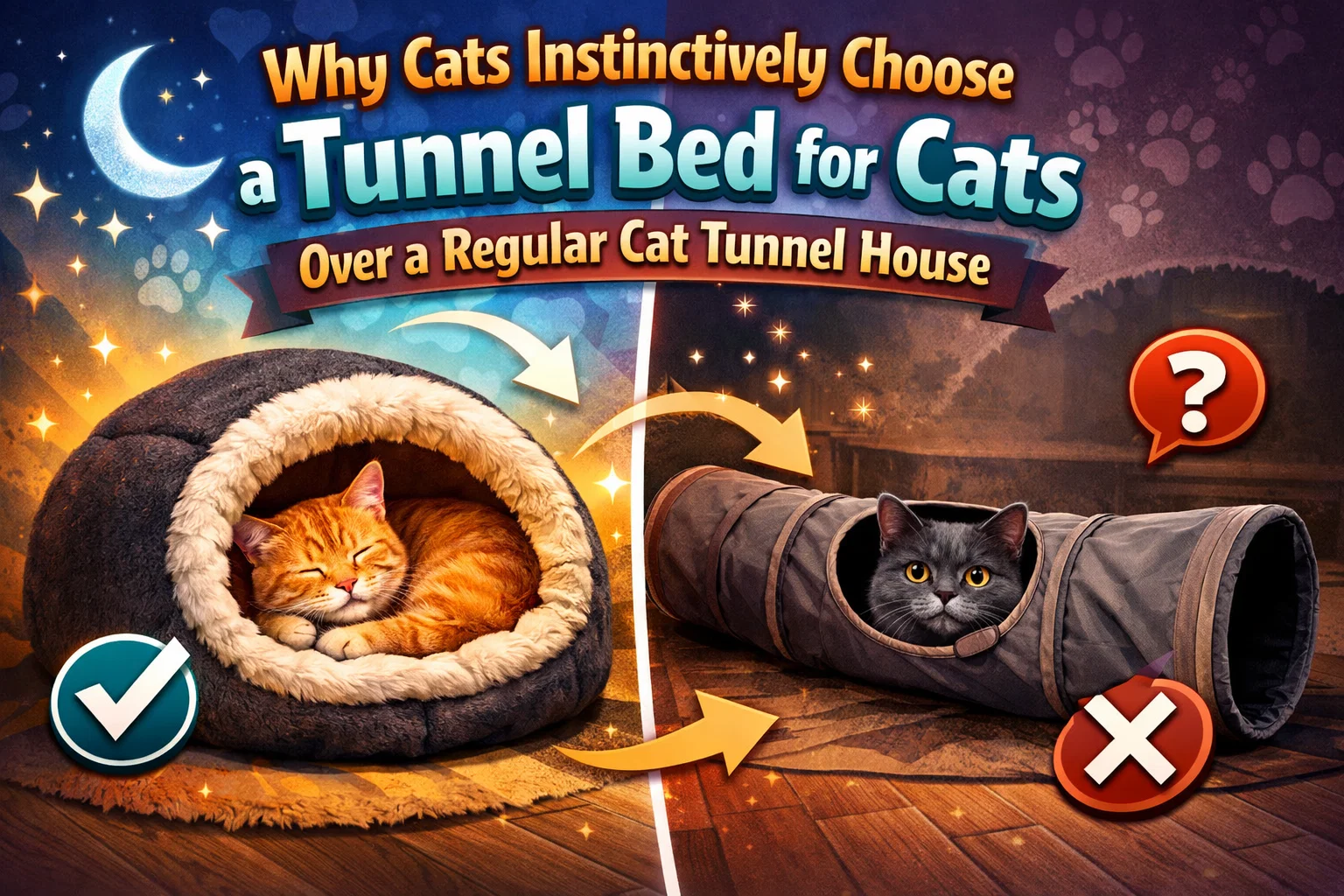
Cats may live in modern homes, but their instincts remain deeply rooted in survival, security, and comfort. This is why, when given a choice, many cats repeatedly choose a tunnel bed for cats over a standard cat tunnel house. At first glance, both products may appear similar. They offer enclosed spaces, opportunities to hide, and a sense of privacy. However, from a feline’s perspective, the difference is significant.
A tunnel bed for cats doesn’t just provide a place to pass through or play. It meets multiple instinctual needs at once rest, concealment, warmth, territorial security, and sensory comfort. A regular cat tunnel house often focuses on activity, while a tunnel bed aligns more closely with how cats naturally rest, hunt, and self-regulate stress.
This article explores the science, behavior, and environmental psychology behind this preference. By understanding how cats think and feel, it becomes clear why the tunnel bed for cats consistently wins in real-world use.
Understanding the Core of Feline Instincts
To understand why cats favor certain spaces, it helps to understand how they evolved. Domestic cats descended from solitary desert hunters. These ancestors survived by staying hidden, conserving energy, and observing their surroundings from protected locations.
Cats instinctively seek:
- Enclosed but not confining spaces
- Warmth and insulation
- Elevated or semi-hidden vantage points
- Areas where they can retreat without being disturbed
A tunnel bed for cats naturally satisfies all of these needs. A cat tunnel house, on the other hand, usually focuses on play and movement rather than rest and long-term comfort.
The Psychological Comfort of Enclosed Sleeping Spaces
Cats sleep between 12 and 16 hours a day. During sleep, they are vulnerable. This is why cats carefully choose sleeping locations that feel safe from threats.
A tunnel bed for cats creates a cocoon-like environment. The curved structure blocks peripheral disturbances while still allowing the cat to remain aware of what’s happening outside. This balance between concealment and awareness mirrors how wild cats sleep in tall grass or narrow dens.
A regular cat tunnel house often has wide openings, thin material, or a structure designed for running through. While fun during playtime, it lacks the psychological security cats seek during rest.
Why Softness and Padding Matter More Than You Think
Texture plays a crucial role in feline comfort. Cats are extremely sensitive to surfaces, especially when resting for long periods.
A tunnel bed for cats is typically padded, insulated, and designed for lounging. The softness supports joints, muscles, and pressure points, which is particularly important for:
- Senior cats
- Cats with arthritis
- Indoor cats who spend long hours resting
In contrast, many cat tunnel house designs use lightweight fabric or crinkly materials that stimulate play but do not encourage long naps. Cats may enter briefly but rarely settle in for extended rest.
Heat Retention and Temperature Regulation
Cats naturally prefer warm environments. Their thermoneutral zone is higher than humans’, which means they feel comfortable at temperatures we may find slightly warm.
A tunnel bed for cats retains body heat efficiently. The enclosed shape traps warmth, creating a self-heating effect without external heat sources. This is especially appealing during colder months or in air-conditioned homes.
A cat tunnel house, especially one designed primarily for play, often allows airflow from multiple directions. This makes it less effective at maintaining warmth and less attractive for sleep.
Security Without Isolation: The Ideal Balance
Cats dislike feeling trapped, but they also dislike feeling exposed. This is where the tunnel bed for cats excels.
Most tunnel beds are designed with:
- Partial openings
- Flexible walls
- Curved shapes that allow visibility
This gives cats control over their environment. They can observe without being seen, retreat without being confined, and exit quickly if needed.
A standard cat tunnel house often emphasizes openness and movement. While this works for play, it does not provide the same level of perceived control during rest.
Territory, Ownership, and Scent Marking
Cats are territorial animals. They feel safest in areas that smell like them.
A tunnel bed for cats quickly absorbs a cat’s scent due to its fabric density and frequent use as a sleeping spot. Over time, the bed becomes a personal territory, reinforcing comfort and reducing stress.
A cat tunnel house, used intermittently for play, does not accumulate scent as effectively. This makes it feel more like a shared or temporary object rather than a personal safe zone.
Stress Reduction and Anxiety Management
Environmental stress is a major issue for indoor cats. Noise, visitors, other pets, and changes in routine can all trigger anxiety.
A tunnel bed for cats acts as a built-in retreat. When overwhelmed, cats instinctively seek enclosed resting spaces where they can decompress.
Veterinary behaviorists often recommend enclosed beds for:
- Shy or nervous cats
- Multi-cat households
- Cats adjusting to new homes
A cat tunnel house may encourage activity but does not consistently provide the same calming effect.
Play vs. Rest: Understanding the Functional Difference
The biggest misconception is that tunnels are only for play. While movement-based tunnels encourage chasing and pouncing, cats also need environments designed specifically for rest.
A tunnel bed for cats combines:
- Light play opportunities
- Resting space
- Hiding space
This multifunctional design aligns with natural feline behavior, where play and rest often occur in the same territory.
A cat tunnel house usually serves a single purpose—activity. Once playtime ends, cats move elsewhere to sleep.
Multi-Cat Homes and Social Boundaries
In homes with multiple cats, personal space becomes even more important. Cats may coexist peacefully but still require individual territories.
A tunnel bed for cats provides a defined personal zone. Cats can retreat without confrontation, reducing tension and territorial disputes.
A cat tunnel house, often shared and passed through, does not offer the same sense of ownership. This can lead to avoidance rather than comfort in multi-cat environments.
How Tunnel Beds Support Aging Cats
As cats age, their needs change. They become less playful and more focused on comfort, warmth, and joint support.
A tunnel bed for cats offers:
- Easy entry and exit
- Cushioned surfaces
- Reduced exposure to drafts
Older cats may completely ignore a cat tunnel house because it requires movement and agility without offering sufficient comfort in return.
Sensory Stimulation Without Overwhelm
Cats are highly sensitive to sound and touch. Many cat tunnel house designs include crinkly materials that stimulate play but can become overstimulating during rest.
A tunnel bed for cats typically uses quieter, softer materials that create a calming sensory experience. This makes it suitable for both alert observation and deep sleep.
Placement Flexibility and Environmental Fit
Cats prefer resting spots that feel integrated into their environment rather than isolated.
A tunnel bed for cats can be placed:
- Near walls
- Under furniture
- Beside windows
This placement enhances security and visual control. A cat tunnel house often requires open floor space, making it feel more exposed and less appealing for rest.
The Role of Predictability in Feline Comfort
Cats thrive on routine. They return to the same sleeping spots daily because predictability reduces stress.
A tunnel bed for cats becomes a consistent part of a cat’s daily rhythm sleep, groom, observe, repeat. Its stability reinforces emotional comfort.
A cat tunnel house, used sporadically, does not create the same routine-based attachment.
How Indoor Living Amplifies the Preference
Indoor cats lack natural hiding spots like bushes, trees, or dens. This makes artificial enclosed spaces even more important.
A tunnel bed for cats compensates for this loss by recreating a natural resting environment indoors. It becomes a substitute for the secure spaces cats would seek outdoors.
A cat tunnel house alone does not fully replicate this experience.
Choosing Between the Two: What Cats Would Pick
If cats could explain their preferences, they would likely choose the option that offers:
- Safety during rest
- Warmth and softness
- Control over visibility
- A sense of ownership
This combination consistently describes a tunnel bed for cats rather than a standard cat tunnel house.
Frequently Asked Questions (FAQs)
What is a tunnel bed for cats?
A tunnel bed for cats is a hybrid design that combines an enclosed tunnel with a soft, padded resting area. It allows cats to hide, observe, and sleep in one secure space, making it more suitable for long-term comfort than a standard play tunnel.
How is a tunnel bed for cats different from a cat tunnel house?
A tunnel bed for cats is designed primarily for resting and security, while a cat tunnel house focuses more on play and movement. Tunnel beds offer padding, warmth, and insulation, whereas cat tunnel houses usually have lighter materials and open structures meant for activity rather than sleep.
Why do cats feel safer in a tunnel bed?
Cats instinctively seek enclosed spaces that protect them while they rest. A tunnel bed for cats provides shelter on multiple sides, limits visual exposure, and allows cats to observe their surroundings without feeling vulnerable, which naturally reduces stress.
Do tunnel beds help anxious or shy cats?
Yes, tunnel beds can help anxious or shy cats feel more secure. The enclosed design gives cats a predictable retreat where they can decompress, especially in busy households or environments with other pets.
Are tunnel beds suitable for indoor cats?
Tunnel beds are especially beneficial for indoor cats. Since indoor environments lack natural hiding spots, a tunnel bed for cats helps recreate a den-like space that supports instinctive resting and self-soothing behaviors.
Can multiple cats use the same tunnel bed?
While some cats may share occasionally, most cats prefer individual resting spaces. In multi-cat homes, having more than one tunnel bed for cats helps reduce territorial stress and prevents competition over sleeping areas.
Do cats sleep better in a tunnel bed than in open beds?
Many cats sleep longer and more deeply in a tunnel bed because it retains warmth and limits disturbances. The enclosed structure provides comfort without isolation, which aligns closely with natural feline sleeping preferences.
Final Thoughts | Why Instinct Always Wins
Cats may enjoy variety, but instinct always guides their long-term choices. While a cat tunnel house can be entertaining, it does not satisfy the deeper needs that govern feline comfort and security.
A tunnel bed for cats succeeds because it mirrors how cats naturally rest, hide, and observe. It respects their instincts rather than challenging them.
When cats choose where to spend their time, they are not being picky they are being biologically accurate. And time after time, instinct leads them back to the tunnel bed.


Discover Modern Comfort: A Guide to Apartment Rent in Beirut
Beirut, the lively capital of Lebanon, is a city that blends deep-rooted history with a mo…



Discover Modern Comfort: A Guide to Apartment Rent in Beirut
Beirut, the lively capital of Lebanon, is a city that blends deep-rooted history with …