

If you are choosing a way to seal your electronics, you usually start by talking to conventional coating suppliers. These companies use liquids like acrylic, urethane, or silicone. These materials are common because they are cheap and easy to find. Most people pick them because they are familiar. You spray the board, it dries, and you move on. But liquid coatings have physical limits that many people ignore until it is too late. I think it is important to understand these limits before you pick a provider, especially if your parts are going into a tough environment.
The Physical Problems with Liquid
Liquid coatings follow the laws of physics in a way that can cause trouble for your design. When you spray or dip a board, the liquid flows. It is subject to surface tension and gravity. This means the liquid naturally pulls away from sharp corners and the edges of components. We call this edge recession. It leaves the most sensitive parts of your board with a very thin layer of protection. If you look at a board under a microscope, you can often see the metal through the coating on the corners of chips.
There is also the issue of solvents. Most liquid coatings use solvents to keep the resin fluid. As the coating dries, those solvents evaporate. This evaporation can leave behind tiny holes called pinholes. You might not see them with your eyes, but moisture and salt will find them. Once moisture gets under the coating, it starts to eat away at the copper traces. I have seen many boards fail in the field because of these microscopic gaps. It is a slow process, but it is a common reason for product returns.
The Gas Process Explained
Parylene Coating does not use liquids. It uses a gas. This process happens inside a vacuum chamber and follows a specific chemical path. It is called chemical vapor deposition. You start with a solid material called a dimer. You heat this dimer until it turns into a gas. Then, that gas moves through a furnace that breaks the molecules apart. Finally, the gas enters a room temperature chamber where your parts are sitting.
Because it is a gas, it does not pool or run. It moves into every tiny gap on your board. It covers sharp edges and flat surfaces with the exact same thickness. It builds up one molecule at a time. This results in a solid barrier with no holes. You do not have to worry about gravity pulling the material away from a corner. The gas finds every surface and seals it.
Material Facts and Differences
You have to choose the right version of the material for your job. Parylene C is the most common. It is very good at blocking water vapor and salt. Parylene N is different. It has a higher dielectric strength, which means it is a better electrical insulator. It can also get into even tighter spaces than Parylene C. Some newer types can handle very high heat, which is good for engines or heavy machinery.
- Thickness: You can apply a layer that is thinner than a human hair. This is great for small sensors.
- Stability: It does not crack when it gets cold or turn into a mess when it gets hot.
- Safety: It is non-toxic and inert. This is why it is the standard for medical implants.
- Weight: It adds almost no weight. This matters for drones and satellites.
The Reality of Cleaning and Prep
A vacuum process is only as good as the prep work. This is where many projects go wrong. If a board has a fingerprint or a bit of oil on it, the coating will not stick. It might look fine at first, but after a few months, it will start to peel. I think this is the most overlooked step in the whole process.
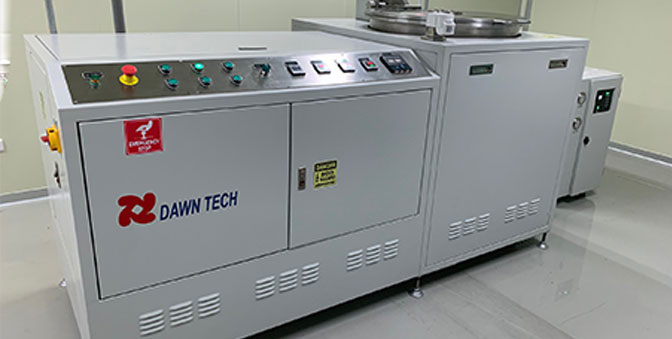
Good shops use a plasma clean step before they start. This uses ionized gas to scrub the board at a molecular level. It is a very deep clean that you cannot get with just a wipe or a wash. If your supplier skips this, you are taking a risk. You can see the equipment used for this at Dawn Tech by visiting https://dawntechsb.com/. They show the systems they use to ensure a clean surface.
The Art of Masking
Masking is another big challenge. Since the gas goes everywhere, you must cover up any parts you do not want coated. This includes connectors, battery terminals, or test points. Masking for a gas process is much harder than masking for a liquid spray. It requires a very steady hand and a lot of patience.
Workers have to apply tiny bits of tape or dots of special gel to the board. If the masking is sloppy, the gas will get inside your ports. Then your device will not plug in. I have seen many projects delayed because someone had to spend a week scraping coating out of a USB port with a needle. You want a partner who has been doing this for a long time and cares about the small details.
Thinking About Repair
You should know that Parylene is hard to remove. This is a sign of how well it protects, but it makes repairs difficult. If a component on your board breaks, you cannot just peel the coating off like a piece of silicone. You usually have to use a laser or a special hot iron to burn through the layer. It is a slow and expensive way to fix a board. If you expect to repair your boards often, you should consider this. But for most, the goal is to make a part that never needs a repair in the first place.
The Total Cost of Ownership
A vacuum process costs more than a simple spray booth. You pay for the machine time, the electricity, and the specialized labor. But you should think about the total cost. If you build ten thousand units and one hundred of them fail because of a leak, what does that cost you? You have to pay for shipping, repair labor, and new parts. You also lose the trust of your customers.
When you look at it that way, Parylene is a solid investment. It is an insurance policy for your reputation. It is the best choice for electronics that simply cannot fail. You can find more details on how to start a consultation or a sample run at https://dawntechsb.com/. Testing a few parts is the best way to see the difference for yourself.
Discover Modern Comfort: A Guide to Apartment Rent in Beirut
Beirut, the lively capital of Lebanon, is a city that blends deep-rooted history with a mo…



Discover Modern Comfort: A Guide to Apartment Rent in Beirut
Beirut, the lively capital of Lebanon, is a city that blends deep-rooted history with …